
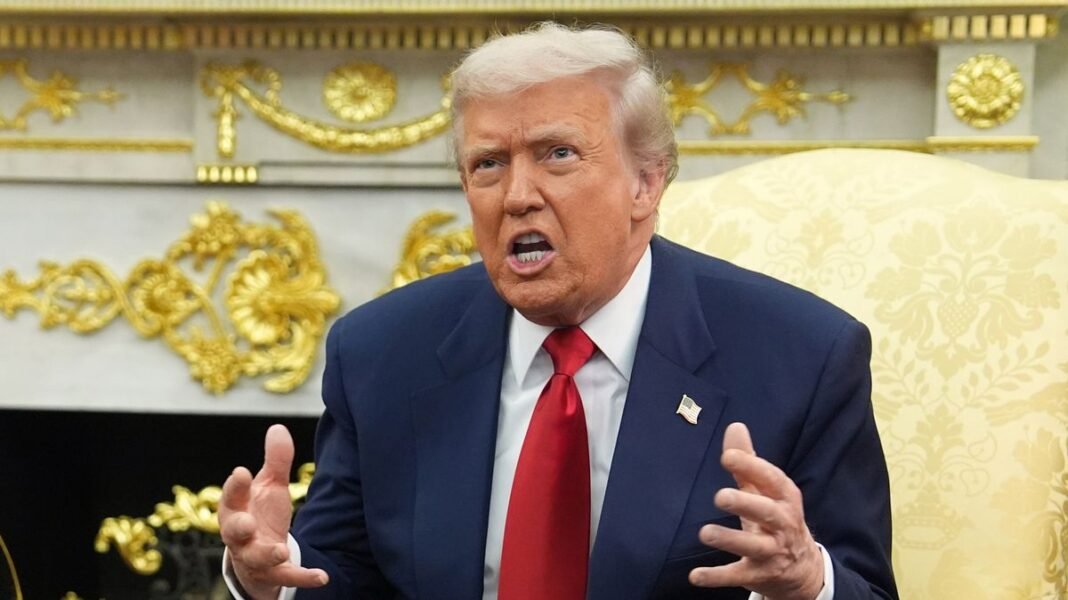

A man with diminutive hands, who once lost power, was never destined to retain it for long a second time. Yet, Donald Trump’s waning political influence eludes his grasp, as most media outlets focus on his rhetoric rather than his evident decline.
The US economy faces challenges with a downturn, escalating prices, surging opposition, and a disinterested base despite Trump’s limited successes in Ukraine and Gaza. Criticism persists even from the late Jeffrey Epstein. Trump’s claim to fame now rests on his unpopularity, making him one of the least favored US presidents in recent history.
As Trump’s approval ratings plummet, there lies a risk in his potential volatile behavior as he faces setbacks. The shift in public sentiment reflects dissatisfaction with his unfulfilled promises on cost of living and border control. Economic struggles exacerbated by global trade disputes and inflated financial markets add to his woes.
Amidst his personal decline at 79, Trump’s physical appearance and public demeanor signal fatigue and aging. Reduced public appearances and truncated speeches hint at a diminished presence compared to his first term, raising concerns about his capacity to lead effectively.
The looming mid-term elections mark a turning point where a president’s authority typically diminishes. For Trump, this spells a potential challenge from younger, more vigorous contenders within his party, signaling a shift towards succession planning.
Trump’s declining status and provocative actions, including calls to resume nuclear testing, pose a global risk. Any nuclear activity by the US could instigate a dangerous arms race with other nuclear powers like Russia and China, jeopardizing global security and stability.
The consequences of Trump’s unraveling extend beyond his presidency, impacting the US status as a superpower and potentially ushering in a new era of authoritarian leadership worldwide. Amidst the uncertainty, a critical reassessment of Trump’s influence is imperative for navigating the challenges ahead.