
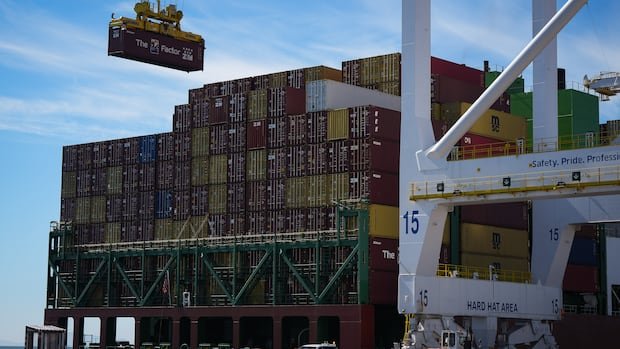

As the deadline nears for Canada to finalize a trade agreement with the United States, numerous Canadian businesses are on edge, foreseeing a potential loss of up to half of their sales if the new tariffs are implemented. The impending round of U.S. tariffs, scheduled to come into effect on Wednesday, would impact $28 billion worth of Canadian goods, including electronics, dairy products, alcohol, and wood, among others.
Negotiations are intensifying as Canadian officials may meet with U.S. Trade Representative Jamieson Greer before Prime Minister Mark Carney and President Donald Trump discuss the matter before the tariff deadline. The final decision rests with President Trump, emphasizing the critical role he plays in any potential deal.
For many Canadian businesses, the proposed tariffs pose a significant threat beyond increased prices for American customers. Todd Stafford, the president of Northern Cables in Brockville, Ontario, expressed concerns as half of their sales depend on U.S. buyers. Stafford highlighted that if the tariffs are implemented, their cross-border shipments could become economically unviable.
The looming tariffs have stirred fear among business owners, with the Canadian Federation of Independent Business (CFIB) noting that a significant revenue loss of 50% would have a profound impact. The Canada-U.S.-Mexico Agreement (CUSMA) has shielded many sectors from previous trade disputes, but the new tariffs could affect about 5% of overall trade between Canada and the U.S.
Some business owners, like jewelry seller Cindy Baldassi, have already taken precautionary measures by halting U.S. shipping on their websites. Baldassi emphasized the challenges faced in finding alternate markets and the limited resources available for business expansion.
Despite uncertainties surrounding the tariffs, some business leaders have already experienced adverse effects, such as layoffs and decreased orders. Randy Williams of Monterey Textiles highlighted the ripple effects of the tariff threat, with potential disruptions to supply chains and customer relationships.
In anticipation of the tariffs, Alberta beekeeper Lorne Prins has witnessed a rush among producers to ship honey to the U.S. before the deadline, fearing surplus honey and price impacts. Prins emphasized the importance of supporting local businesses through initiatives like the Buy Canadian movement in case the tariffs come into effect.