
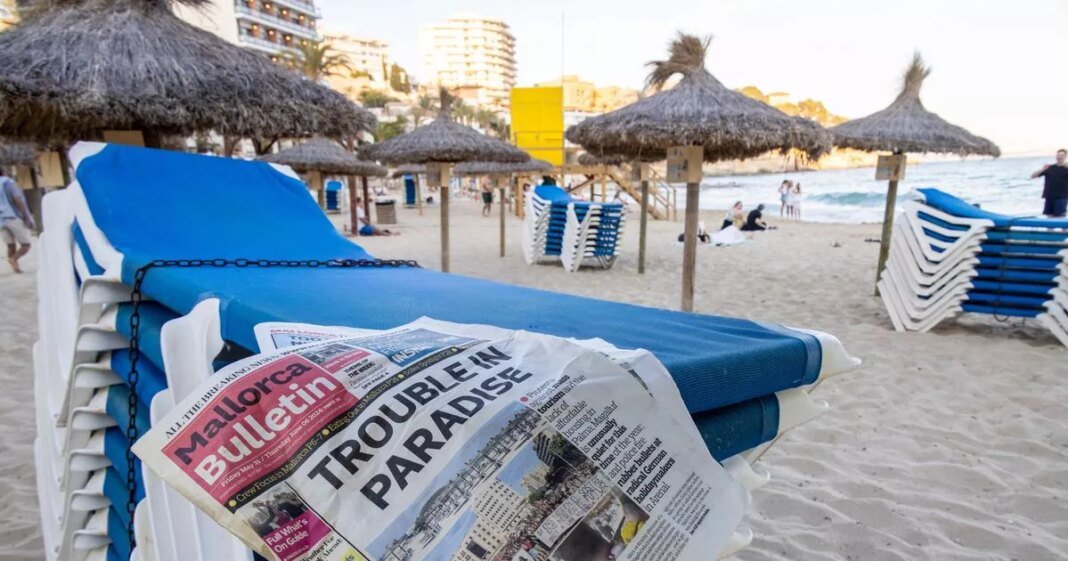

A recent report indicates that more than half of vacationers would alter their travel arrangements upon learning about overtourism in a popular destination during peak seasons. The study by Travel Weekly’s Insight Report shows that approximately two-thirds of travelers would adjust their plans if they found out that a destination had witnessed protests due to excessive visitor numbers.
Several European destinations, most notably Spain’s Balearic and Canary Islands, have faced demonstrations against overtourism in the past year. Despite a significant portion of holidaymakers expressing willingness to change plans in response to protests, only 46% of respondents were familiar with the term ‘overtourism’ and just 40% were aware of recent protests.
The research, conducted by Service Science and Kantar among 1,281 UK adults in early January, revealed that younger adults were less likely to be aware of overtourism or recent protests. Only 32% of 16-34-year-olds had heard of overtourism, compared to 53% of 45-54-year-olds and 64% of those aged 55 and above.
Additionally, the study highlighted that fewer individuals aged 16-44 were aware of protests compared to older age groups. Despite varying levels of awareness, there was a clear trend among respondents supporting the idea of choosing an alternative destination if they became aware of overtourism issues or local protests.
In a separate study by YouGov, it was found that a majority of respondents in Spain, France, the UK, and Germany would endorse implementing taxes to combat overtourism. Support for imposing limits on tourist numbers was also high across these countries, with 50% in the UK, 60% in Spain, and 62% in France and Germany expressing approval.
Last year, Palma de Mallorca in the Balearic Islands saw over 10,000 protestors rallying against mass tourism, with concerns raised about the impact on the property market due to the surge in holiday homes and short-term rentals. Demonstrators carried signs with various slogans advocating for tourism limits and highlighting the negative consequences of excessive visitor numbers.
Various destinations have faced similar challenges, leading to the introduction of measures to mitigate overtourism effects. For instance, Venice, Italy, has implemented strategies such as entry fees, group size restrictions, and bans on loudspeakers to address the issue.