

Earlier this year, the United States experienced its most devastating mid-air collision in a quarter-century when an American Airlines flight collided with an army helicopter near Reagan Washington National Airport. The tragic incident resulted in the loss of all 67 individuals on the DC flight and all three soldiers aboard the Black Hawk helicopter, with debris from both aircrafts plunging into the Potomac River. As the investigation by the US National Transportation Safety Board progresses, the families of the victims are demanding answers with increasing urgency.
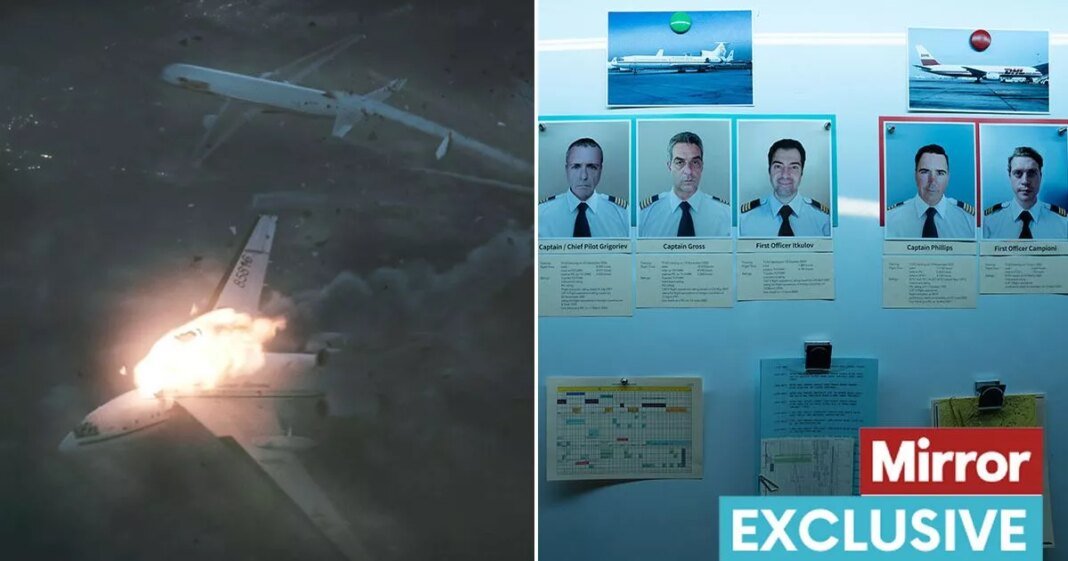
In a hauntingly similar event 22 years ago above Überlingen, Germany, a mid-air collision claimed the lives of all 71 individuals on board, leaving grieving relatives desperate for explanations, notably many children among the casualties. On July 1, 2002, Bashkirian Airlines Flight 2937 traveling from Moscow to Barcelona and DHL International Aviation ME Flight 611, a Boeing 757 cargo jet en route from Bergamo to Brussels, collided over Uberluigen. This tragic incident is now the focus of an episode on the National Geographic Channel’s Air Crash Investigation series.
The fatal collision was exacerbated by critical errors and technical glitches, notably the controller at Zurich, Peter Nielsen, who was unaware that the ground-based optical collision warning system at the control tower was disabled for maintenance that night. Despite both aircraft being equipped with functioning Traffic Alert and Collision Avoidance Systems (TCAS), the miscommunication occurred when the Russian crew followed Nielsen’s directive to descend, conflicting with TCAS instructions. This fatal error sealed the fate of all passengers on both flights.
One of the individuals deeply affected by this tragedy was Russian architect Vitaly Kaloyev, who lost his wife Svetlana and two children, Konstantin and Diana, in the crash. Overwhelmed by grief, Kaloyev took matters into his own hands and tragically ended Nielsen’s life. Despite serving time in prison, Kaloyev expressed that his actions were not driven by revenge but a desire for acknowledgment and accountability.
The investigation into the crash highlighted a series of errors and technical failures, including Nielsen’s mistakes and the strained conditions at Skyguide, the Swiss air traffic control system. Skyguide compensated the families of the victims, and in a subsequent legal proceeding, several managers were penalized. The aftermath of the tragedy has been commemorated in various forms of media, including the film “2017 Aftermath,” which draws on the Überlingen midair crash and Kaloyev’s personal narrative.
For those interested in further exploring this tragic event, Air Crash Investigation’s episode “Deadly Climb” can be viewed on the National Geographic Channel on Sky Demand.