
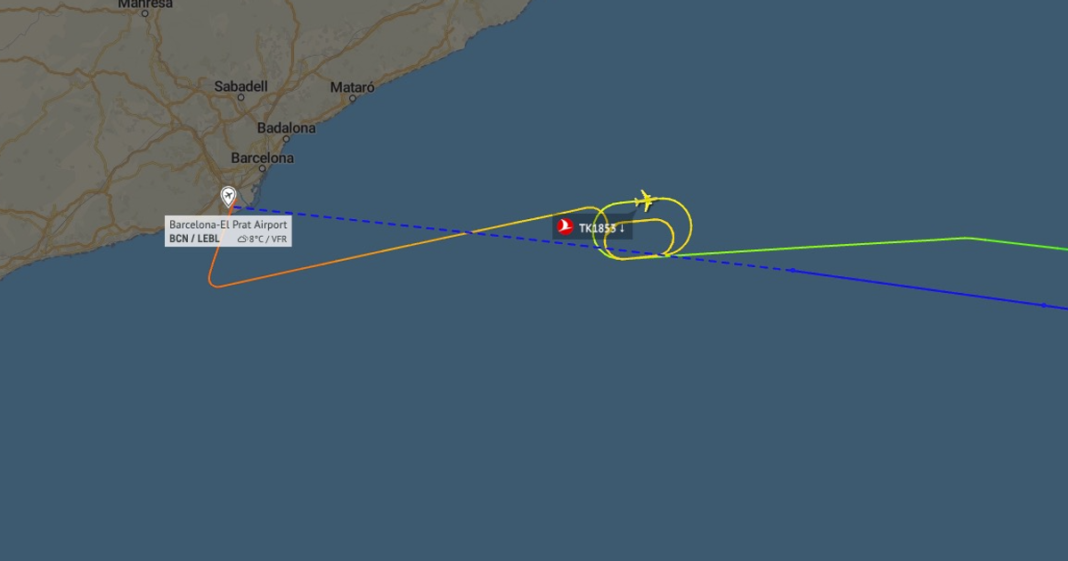

NATO fighter jets were scrambled to intercept a commercial flight following the activation of a ‘bomb threat’ WiFi hotspot by a passenger. The Turkish Airlines flight TK1853, which departed from Istanbul, triggered an emergency alert prompting French fighter jets to be deployed as part of a Quick Reaction Alert (QRA) protocol. Subsequently, Spanish jets took over escort duties as the aircraft entered Spanish airspace.
The Catalan news outlet reported that the plane was accompanied by military aircraft after a threat was identified over the Mediterranean Sea within Italian territory around 10 am. The crew declared a general emergency using squawk code 7700, leading to the diversion of the flight to Barcelona-El Prat Airport. Upon landing, the aircraft was directed to an isolated area of the airport to minimize potential risks to other flights.
The alarm was raised due to the detection of a WiFi hotspot network named “I have a bomb, everyone will die,” confirmed by Turkish Airlines Communication Director Yahya Üstün and Catalan authorities. The safety protocols were immediately activated to address the situation, ensuring the well-being of the 148 individuals on board.
Following a safe disembarkation, all passengers were relocated to the airside contingency room at the airport. Sniffer dogs were deployed to conduct a thorough search of the plane, revealing no explosives, as confirmed by Spain’s Civil Guard police force.
The incident caused a delay of approximately 30 minutes, disrupting the flight’s intended destination of Barcelona temporarily. Operations at the airport resumed normalcy shortly after the incident was resolved.
In a separate aviation occurrence, an Air India flight en route to Birmingham experienced a mid-air emergency due to adverse weather conditions caused by Storm Goretti. Flight AI117, departing from Amritsar, Punjab, transmitted a squawk code 7700 on January 9. The aircraft diverted near Leamington Spa, altering its course towards London to address a “Minimum Fuel” situation, necessitating priority handling from Air Traffic Control (ATC).
Amid heavy snowfall and low visibility below the required landing parameters, Birmingham Airport suspended all runway operations on the evening of January 9. The situation was exacerbated by the challenging weather conditions brought by Storm Goretti, prompting the emergency diversion of the Air India flight for safety reasons.