
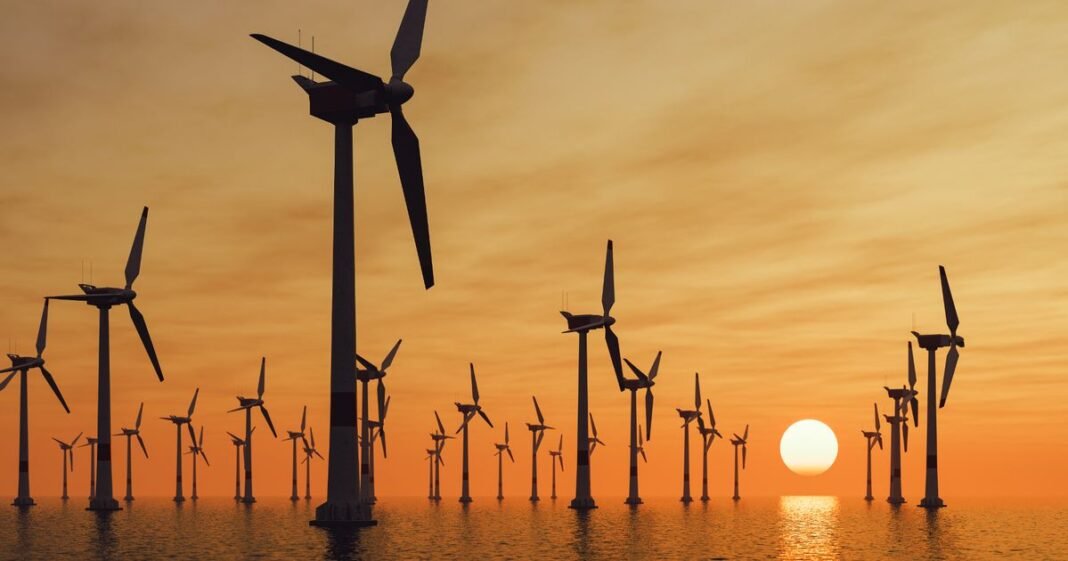

The UK government has unveiled its largest-ever expansion of offshore wind energy to reduce household bills in the long run. Energy Secretary Ed Miliband praised the initiative, which aims to power the equivalent of 12 million homes, as a significant move towards the nation’s clean energy objectives.
Advocates argue that investing in clean, domestically produced power will lead to sustained cost reductions and the creation of numerous jobs across the UK. However, critics express concerns that the subsidies provided to wind farm operators through taxpayer guarantees could potentially result in higher bills for consumers over the coming decades.
Despite estimates indicating that levies on bills could reach nearly £1.8 billion annually by 2030 when the proposed wind farms become operational, the expectation is that lower wholesale prices will offset this impact. The Labour party has endorsed wind farms as a means to decrease the UK’s dependence on imported energy sources, which have contributed to escalating energy costs following recent geopolitical events.
While the latest funding round, secured through an auction, has allocated 8.4 gigawatts of wind power, there are opposing views on the sustainability and implications of this green energy drive. The government asserts that the auction results, with an average price of £90.91 per megawatt hour, represent a 40% cost savings compared to constructing and maintaining new gas plants. The initiative is projected to attract around £22 billion in private investments and support approximately 7,000 jobs.
Key offshore wind projects awarded in the auction include Dogger Bank South, Norfolk Vanguard, and Berwick Bank, positioning the UK as a leader in offshore wind energy generation. These projects are expected to play a crucial role in reducing energy prices and enhancing energy security for households in the UK.