
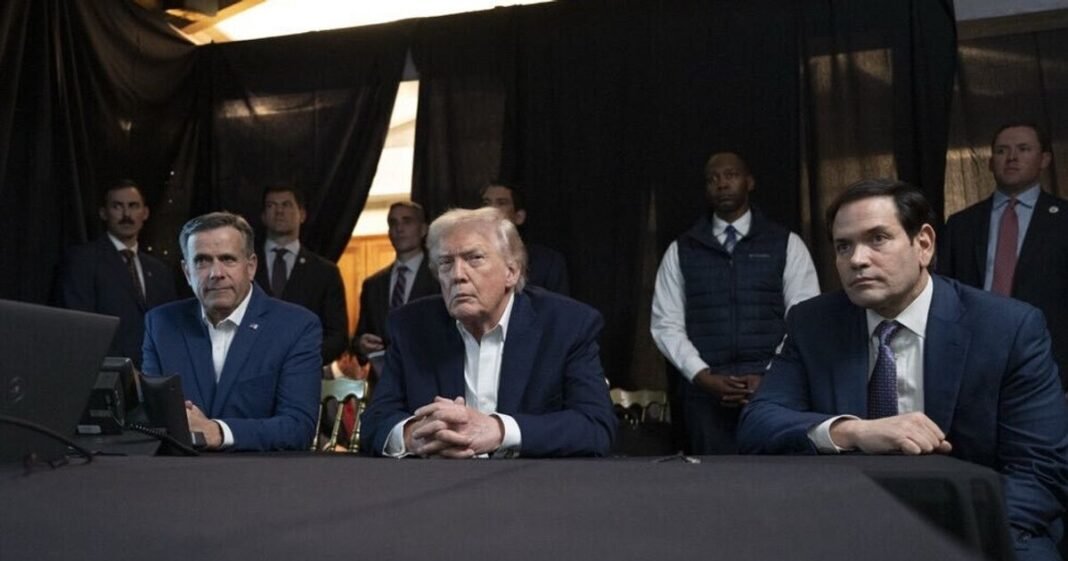

In a covert operation during the late hours, Venezuelan leader and his spouse were seized from their beds and transported via helicopters by U.S. Special Forces.
The legality of such actions by President Trump is questionable. International norms generally prohibit unilateral interventions in foreign territories to apprehend leaders for domestic trials, raising concerns about the potential ramifications.
Contrary to claims, the motive behind the operation seems to be more related to securing oil resources rather than combating drug trafficking. Venezuela, with its comparatively lower drug production, raises doubts about the emphasis on drugs as the primary driver.
A recent pardon of a former Honduran President by Trump, who was convicted in the U.S. for drug-related charges, adds complexity to the narrative surrounding the administration’s anti-drug efforts in South America.
Explicit statements by Trump and his associates suggest a strategic interest in reclaiming what they perceive as “stolen oil,” alluding to Venezuela’s immense oil reserves, the largest globally standing at 303 billion barrels.
The exploitation of Venezuelan oil reserves appears to be a central objective for the U.S., potentially benefiting both American interests and the Venezuelan economy, echoing a familiar narrative of resource-driven geopolitics.
The principles of international law and post-World War II agreements emphasize the prohibition of coercive actions, such as seizing resources or dictating terms to sovereign nations, underscoring the importance of respecting global norms and sovereignty.
While powerful nations may have the capability to impose their will on smaller counterparts, the ethical imperative lies in upholding the rule of law and preventing arbitrary interventions that could lead to conflict, suffering, and instability.
Justification based on notions of “sphere of influence,” as claimed by Trump regarding Venezuela, raises concerns about setting precedents that could embolden other major powers like China and Russia to assert similar claims over regions within their perceived domains.
The potential implications of such actions extend beyond individual cases, highlighting the delicate balance of power and respect for international boundaries in a complex geopolitical landscape.