
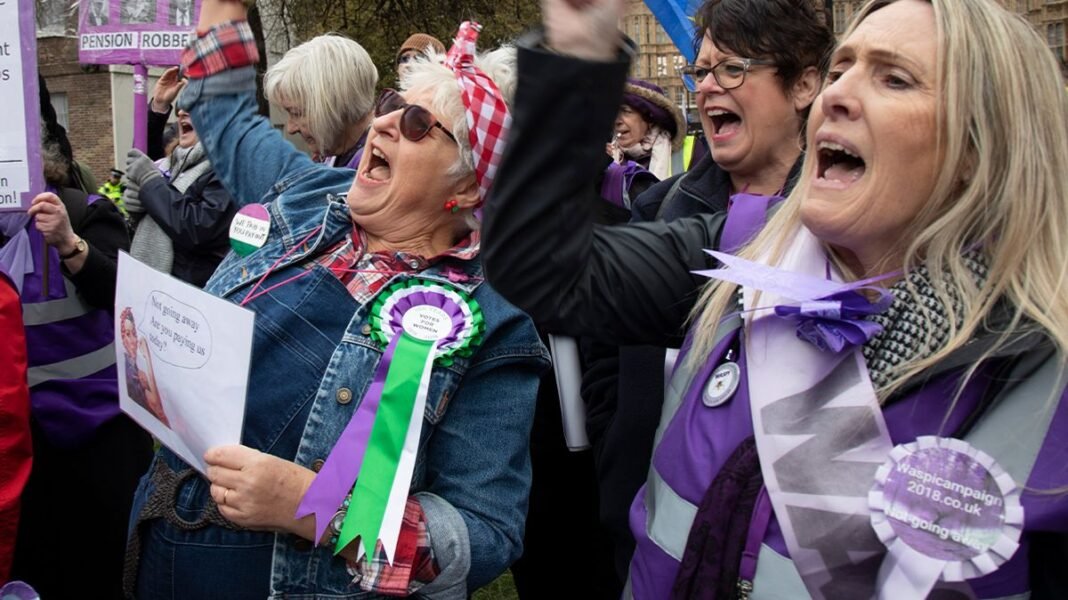

A recent poll revealed that two thirds of young voters support the idea of the Government providing compensation to WASPI women. The campaign has gained significant backing from individuals aged 18-34, with 66% advocating for payouts to over three million women born in the 1950s. Angela Madden, the chair of WASPI, emphasized the urgency for the government to address this issue, stating that they are running out of opportunities to deliver justice.
In the upcoming month, a decision will be made on whether the Government will reconsider its stance on denying compensation following the emergence of new evidence. Madden highlighted that the survey results demonstrate the younger generation’s understanding of the importance of fairness and justice across different age groups. The strong support from individuals aged 18-34 reflects a refusal to tolerate a society where governments evade accountability and withhold compensation from those who have been wronged.
A survey conducted by Yonder with 2,095 participants found that 53% of individuals aged 18-34 believe the Government should debate and vote on the compensation issue. Additionally, 77% stated that those affected by maladministration should receive redress without resorting to legal action.
Pressure is mounting on the Government to reverse its decision of not granting compensation ranging from £1,000 to £2,950 to 3.6 million women. WASPI was prepared for a legal battle in December to demand a judicial review, but legal proceedings have been paused pending the outcome of the current review.
Madden emphasized the necessity of a compensation scheme, stating that time is running out for the government to act decisively. She warned that failing to heed the recommendations of the Parliamentary Ombudsman could result in widespread national outrage and further legal actions.
Campaigners have raised over £250,000 to support their legal challenge. Failures within the DWP led to inadequate communication about the decision to raise the state pension age for women, causing severe financial hardships for many. Affected women faced challenges as their state pension age increased from 60 to 65 and then to 66. The DWP clarified that they would reassess the decision within three months but did not guarantee financial compensation as an outcome.