
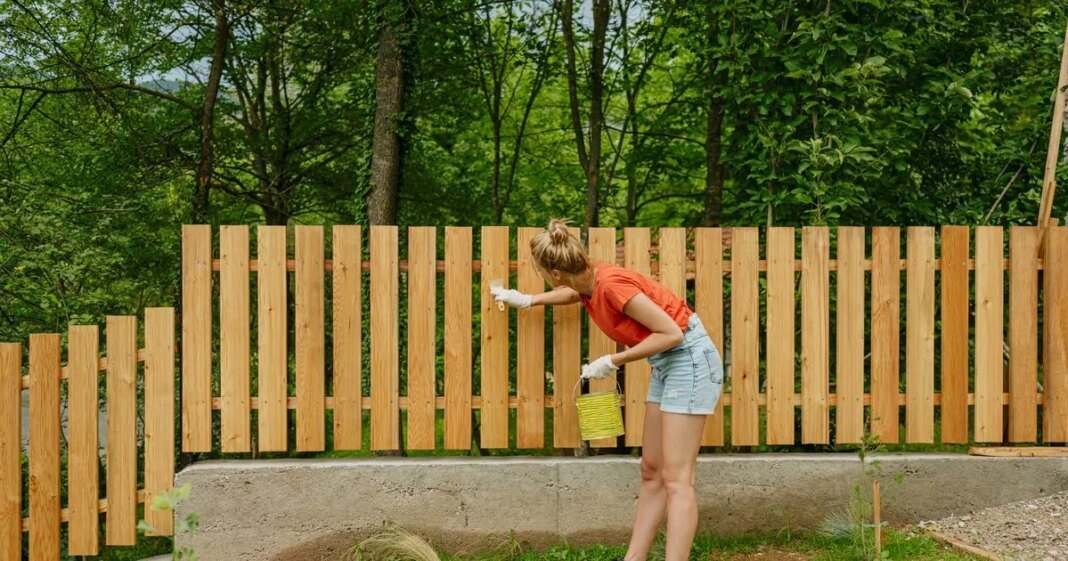

As spring arrives, bringing brighter skies and longer days, thoughts turn to returning to our outdoor gardens. However, after a long winter, your garden fences may have accumulated algae growth. Algae, often associated with green slimy substances, actually encompass a variety of photosynthetic organisms that can manifest in different colors like red, brown, and yellow. Unlike typical plants, algae have distinct cell structures and growth mechanisms.
The presence of algae on wooden garden fences is attributed to the nutrients it obtains from dirt, dust, and soil residues. Neglected fences, especially in damp and shady conditions, become ideal environments for algae proliferation. Apart from its unsightly appearance, algae can cause significant damage to fences by trapping moisture, leading to rot and decay over time, accompanied by an unpleasant odor that may necessitate fence replacement.
To effectively remove algae, experts recommend using a mixture of bleach and mild soap (not dish soap) as cleaning agents. It’s crucial to avoid mixing bleach with dish soap, as this combination can produce toxic chloramine gas, which poses health risks. The cleaning process involves scrubbing the affected areas with the bleach solution, rinsing with water, and allowing the fence to dry before applying wood preserve to restore its condition.
Basic cleaning supplies like bleach and mild soap are affordable and readily available. For instance, Easy Seriously Thick Bleach can be purchased for 55p from The Range, while Carex Dermacare Hand Soap is priced at just £1.07 on Viking Direct. Taking these steps can help maintain the integrity and appearance of your garden fence, ensuring a welcoming outdoor space for the season.