
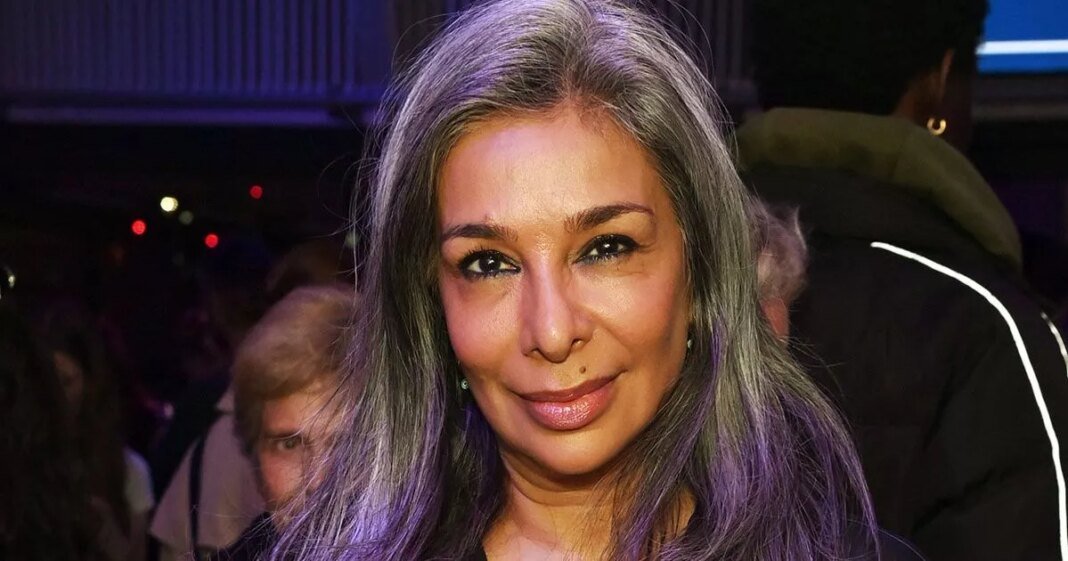

Shobna Gulati has made a significant announcement regarding their personal identity by revealing that they identify as non-binary. Non-binary individuals often do not conform to traditional gender categories of male or female.
The renowned TV personality, best known for portraying Sunita Alahan on the ITV soap opera Coronation Street, has been a prominent figure even after their character’s departure in 2013.
Shobna, now using both she and they pronouns, has been candid about their struggles since gaining fame, including battling severe depression that required the support of two counselors. They expressed, “Corrie fame made me a recluse. When I resigned, I knew it was the right decision.”
While Shobna openly discusses certain aspects of their life, they usually maintain privacy about their relationships. They married Anshu Srivastava in 1990 but divorced four years later. Shobna later had a son named Ashkay in 1994 from a different relationship. They also had a romance with former Emmerdale actor Gary Turner from 1999 to 2003.
Following subsequent relationships, including a significant age gap with Anthony Brown, Shobna now shares that they have found love again. At 58, they have proudly embraced their non-binary identity, a feeling they have carried throughout their life.
In a podcast interview, Shobna expressed, “I’ve found contentment in defining myself as a person. I’ve discovered the term ‘non-binary,’ which resonates with me. It’s a new way to articulate who I am.” They also mentioned being open to dating individuals regardless of gender, emphasizing a shift in their perspective on love.
Reflecting on their book “Remember Me? Discovering My Mother As She Lost Her Memory,” Shobna acknowledged a shift in their outlook on life and love. They realized the importance of self-reflection and noted the transformative power of love.
Despite challenges in their love life due to fame, Shobna remains optimistic, stating, “Love can overcome obstacles.” They highlighted the impact of celebrity status on their relationships, noting the difficulty of forming genuine connections beyond their public persona.