
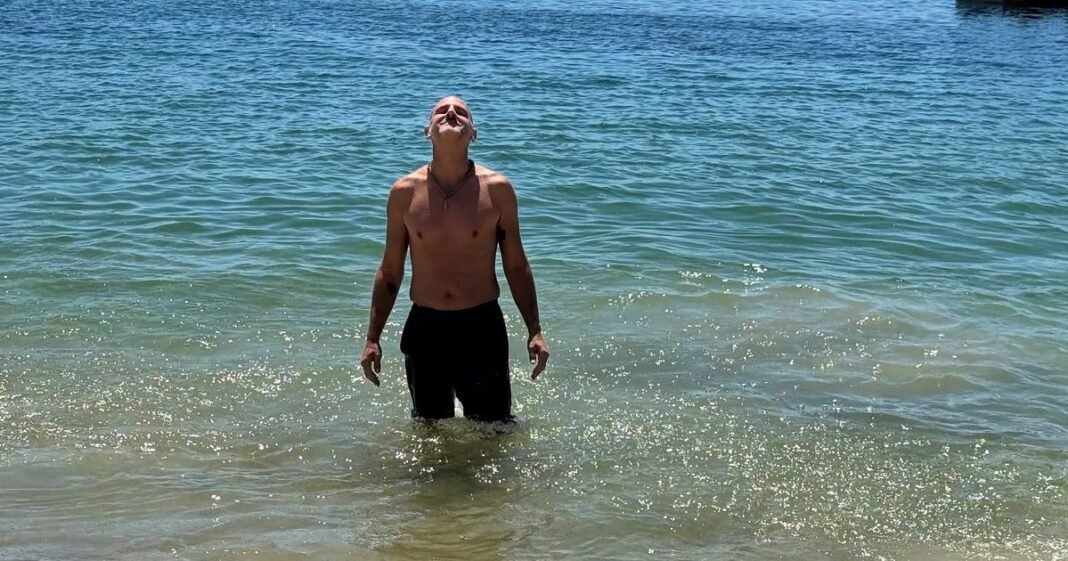

A father vividly recounted a terrifying encounter with one of the ocean’s deadliest creatures that nearly took his life. Jaun-Paul ‘JP’ Kalman was paddling in the shallow waters of Balmoral Beach in the Mosman region of Sydney, Australia, on February 5 last year when the incident occurred. While exploring, he unknowingly picked up what he thought was an oyster shell, only to discover a blue-ringed octopus clinging to his thumb, a venomous marine animal with vibrant yellow coloration and striking blue rings.
Despite initially feeling no pain, Kalman soon experienced numbness in his thumb and lips, accompanied by slurred speech and confusion. Recognizing the severity of the situation, he sought help from his ex-wife, Courtney, who rushed him to Royal North Shore Hospital. The potent venom of the octopus swiftly caused paralysis, leaving Kalman conscious but immobile. Medical professionals placed him in an induced coma for 20 hours to combat the effects of the toxin, during which he feared for his life, expressing his desire to survive for the sake of his children.
Following his ordeal, Kalman continued to face episodes of paralysis, even collapsing in a store shortly after being discharged from the hospital. Despite the traumatic experience, he expressed gratitude for his survival, emphasizing that the outcome could have been tragic had it been one of his children bitten. Blue-ringed octopuses, typically quiet and non-aggressive, possess venom containing tetrodotoxin, a substance significantly more toxic to humans than cyanide, with no known antidote. These creatures only display their distinctive blue rings when threatened, serving as a warning signal to potential predators. While historical records note approximately 11 fatalities caused by encounters with this species, Kalman’s resilience and perspective reflect a sense of fortune amid the danger posed by these small but lethal marine animals.