
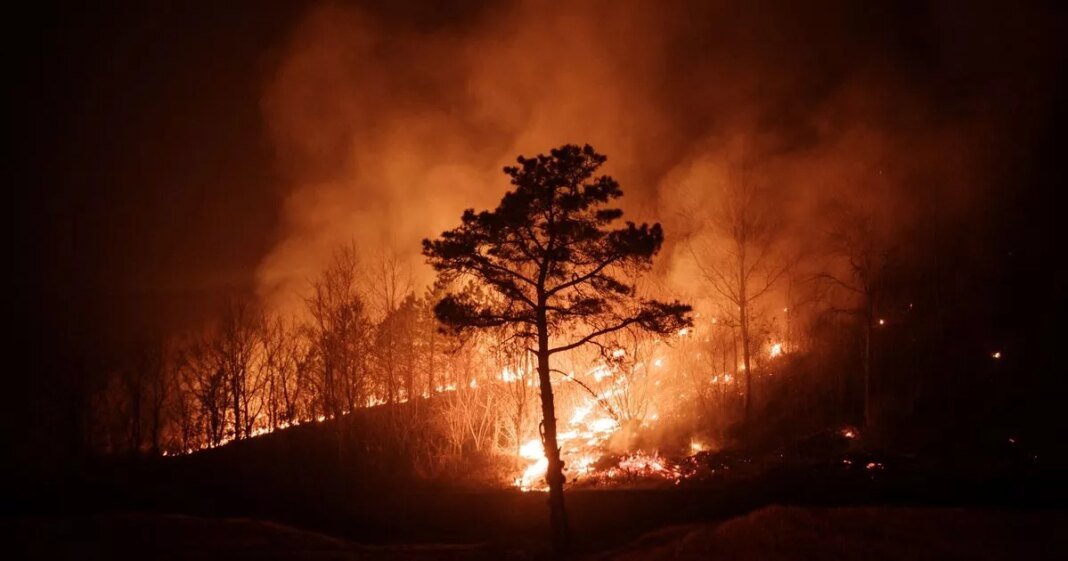

A helicopter crashed during severe wildfires in South Korea, claiming 18 lives. The aircraft, dispatched to combat the devastating blazes, lost control and went down in Uiseong at 2 pm local time. The pilot, the sole occupant, is believed to have perished in the incident.
The wildfires have ravaged over 200 structures, including a historic Buddhist temple, residences, factories, and vehicles, leading to the evacuation of 27,000 individuals. Acting President Han Duck-soo highlighted the unprecedented damage caused by the fires, urging intensified firefighting efforts to mitigate further losses.
Efforts to contain the wildfires have been hampered by strong winds, with thousands of firefighters, soldiers, and support staff battling the blazes alongside 130 helicopters. Limited rainfall is forecasted, offering a glimmer of hope in the ongoing crisis.
The wildfires, considered the third largest in South Korea based on the affected land area, have prompted evacuation orders in various regions. Despite initial progress in extinguishing the flames, adverse weather conditions have reignited the fires, leading to renewed challenges for the firefighting teams.
In Uiseong, significant damage was reported at Gounsa, a centuries-old temple housing valuable cultural artifacts. The destruction of irreplaceable structures and artifacts has dealt a heavy blow to the region’s cultural heritage.
Precautionary measures, such as relocating inmates and escalating wildfire alerts, have been implemented to mitigate further damage and safeguard lives. Tragically, casualties, including firefighters and government personnel, have been reported, underscoring the grave consequences of the ongoing crisis.
Authorities suspect that human activities, such as burning vegetation or welding operations, may have sparked some of the fires, highlighting the importance of caution in fire-prone environments. The situation remains critical as emergency responders continue their relentless battle against the relentless infernos.