
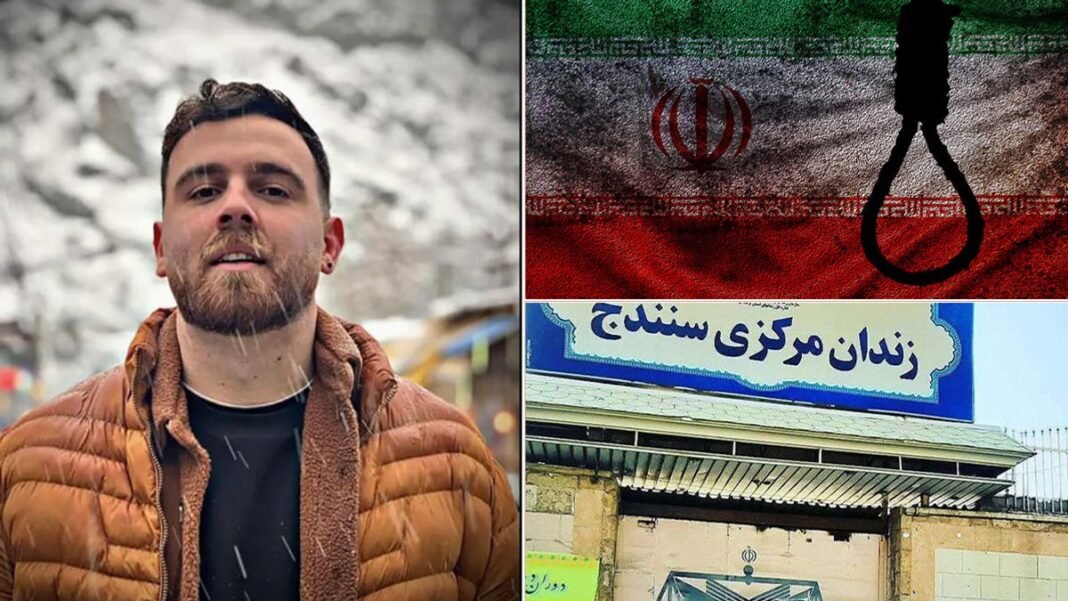

An Iranian protester faces uncertainty as his scheduled execution was postponed at the last moment. Erfan Sultani, a shopkeeper from Fardis near Tehran, was set to be hanged on January 14. However, following intervention from US President Trump, his death sentence has been delayed temporarily by the Iranian regime amid ongoing anti-government protests in the country.
The internet shutdown in Iran has reportedly dampened the protests. Despite this, human rights groups and Sultani’s relatives confirm that his execution has been halted for now. The 26-year-old was arrested on January 8 and charged with “waging war against God,” a serious offense under Iranian law commonly used to target perceived threats to the government.
Sultani’s case has garnered global attention due to the swift trial lasting only an hour, allegations of lack of legal representation, and restricted access to his case file. His family was given a mere 10 minutes to bid him farewell before being warned that his sentence is final.
Meanwhile, anti-government demonstrations have turned deadly with thousands of protestors reportedly killed in violent crackdowns. Iran, alongside China, holds the highest number of executions annually, with a staggering 1,922 death penalties carried out last year according to human rights groups.
Amnesty International has criticized the unfair trials in Iran, citing vague charges like “corruption on earth” that are often used to target dissenters. The country’s execution methods include hanging, stoning, firing squad, beheading, and throwing from a height, with public executions conducted in prisons like Ghezel Hesar, Raja’i Shahr, and Sanandaj.
Former inmates have described horrific conditions in notorious prisons like Evin, known for torture and severe overcrowding. Anoosheh Ashoori, a former hostage, shared harrowing details of his ordeal, highlighting poor sanitation, lack of medical care, and constant psychological pressure within the prison walls.
The oppressive regime in Iran employs tactics to instill fear and control, using executions and harsh prison conditions as tools of political terror. Such actions not only inflict suffering on individuals but also aim to project power and induce psychological trauma on a wider scale.