
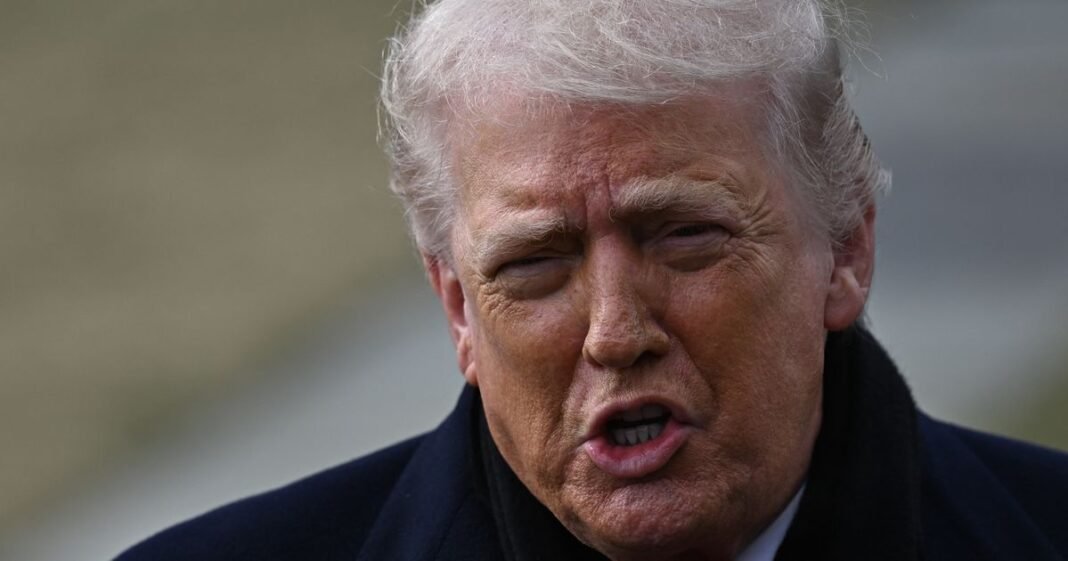

President Donald Trump criticized Iran’s Supreme Leader Ayatollah Ali Khamenei, calling him a “sick man” and labeling Iran as the “worst place to live” following anti-government protests that reportedly resulted in over 3,000 deaths.
Ayatollah Khamenei retaliated by denouncing Trump as a “criminal” for allegedly supporting the protesters, which he claimed led to the high number of casualties. Trump, in response, urged for an end to Khamenei’s four-decade rule, stating that the Iranian leader should focus on governing his country properly instead of causing harm to its citizens.
Trump emphasized the need for new leadership in Iran and criticized the current regime’s handling of the protests. Khamenei, in a televised speech, acknowledged the significant loss of life during the demonstrations and accused the US president of instigating and backing the protesters for his own agenda of seeking control over Iran’s resources.
The exchange of accusations continued with Khamenei describing the protesters as agents of the United States, alleging they caused destruction and loss of life. Trump, in a shift of tone, praised Iran for reportedly canceling the execution of over 800 individuals, indicating a possible de-escalation of tensions.
Tehran’s prosecutor dismissed Trump’s statements as irrelevant and maintained a firm stance against any interference. Despite Trump’s earlier remarks of support for the protesters, Khamenei warned against foreign intervention and emphasized the need to address internal and external threats to national security.
The conflicting narratives between the US and Iranian leadership highlight the ongoing tensions and power struggle between the two nations. Trump’s remarks on potential actions in response to further violence in Iran indicate the complexity of the situation and the delicate balance of diplomatic relations.