
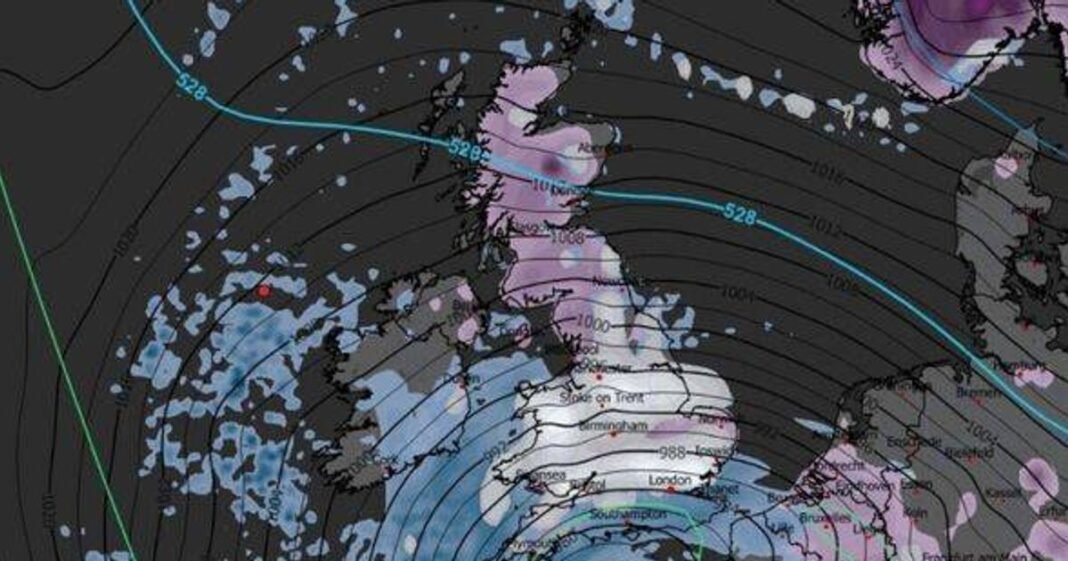

Britons are preparing for an upcoming snowfall spanning a massive 656-mile stretch from London to just south of John O’Groats in the UK by the end of January. Weather forecasts indicate a significant snow band moving eastward over Bulgaria and Hungary on January 30, expected to reach the UK by 6am the following day. The majority of the UK is anticipated to experience wintry conditions on Saturday, January 31, with only Cornwall and Northern Ireland likely to escape the snowfall.
Temperatures are predicted to drop to as low as -5C in certain areas of the UK, with even colder conditions expected across Europe. A map detailing the snow coverage in various regions is available for reference.
The forecast shows a widespread snow blanket stretching across the country, enveloping areas north of London, Wales, most of England, and a significant portion of Scotland. Snow is expected to start accumulating in northern England and Scotland by midday, with lesser chances in the southern regions.
The southern parts of England are set to experience freezing temperatures, with lows of -3C in the Cotswolds by early Saturday morning, potentially leading to icy roads. The Midlands may see temperatures rise above freezing, while the north could drop to -2C, as reported by the Express.
In rural areas of Scotland, temperatures could plummet to -5C, while cities like Aberdeen, Edinburgh, and Glasgow may hover around freezing. Wales and Northern Ireland are likely to experience fluctuating temperatures, with more rain expected in Northern Ireland compared to snow.
The Met Office acknowledges the complexity of predicting snowfall but indicates a likelihood of cold weather and snow in the upcoming weeks. The forecast suggests a battle between Atlantic weather systems and high pressure from the east, potentially leading to colder conditions and snowfall. Looking ahead to early February, there is a warning of cold weather affecting the UK and the possibility of wintry hazards.
As we move deeper into February, the forecast indicates a potential shift towards more unsettled conditions and a return to near-average temperatures.