
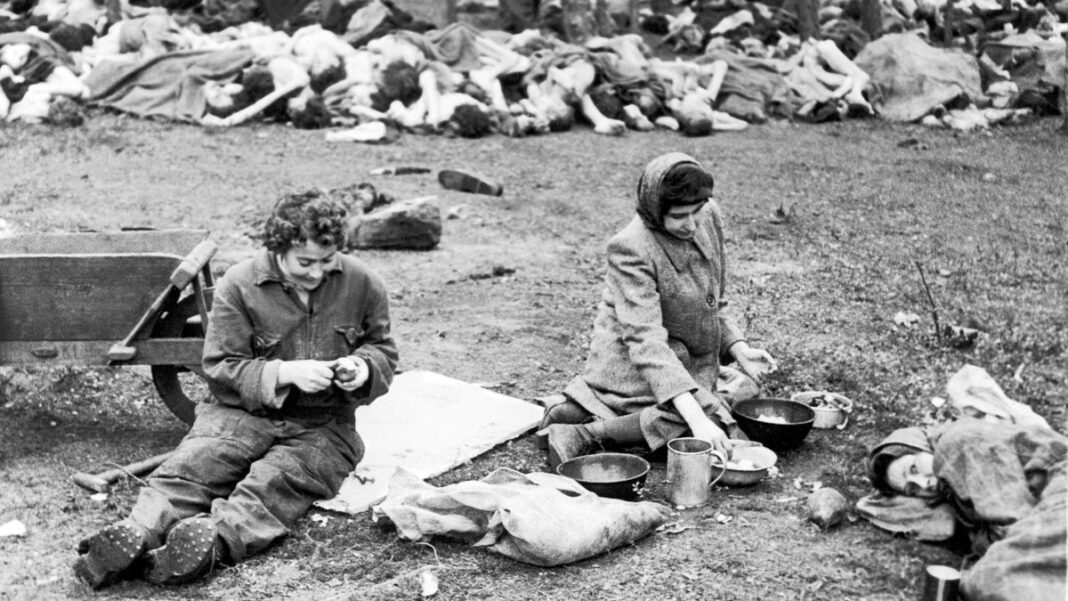

Protests have erupted in Germany following the dissemination of disturbing fabricated AI images depicting the Holocaust, with the sole purpose of generating profits. Various institutions located at former concentration camps such as Bergen-Belsen and Dachau have collectively penned an open letter, calling for immediate action to address this issue. They denounced the utilization of these appalling images purely for financial gain, describing it as a business model centered on attracting clicks and advertising revenue.
The counterfeit images, which often evoke strong emotions and appear convincingly real, portray harrowing scenes such as emaciated and weeping children behind barbed wire, fictional reunions between camp inmates and liberators, and fabricated camp scenarios that never actually occurred. Over 80 memorials, archives, museums, and research institutions in Germany have signed the letter, expressing concern that artificial intelligence is being exploited to combine historical fragments with fictional elements, resulting in emotionally charged content that deceptively appears genuine while subtly altering documented history.
The letter highlighted the commitment to safeguarding the life stories of Holocaust survivors and their descendants from exploitation for profit by strangers, emphasizing the need for a digital public sphere that upholds historical accuracy. It condemned the dissemination of AI-generated content that distorts and trivializes historical events, warning that such material is being used to distort facts, alter victim-perpetrator dynamics, and propagate revisionist narratives. The letter also pointed out the detrimental impact of these posts on the credibility of memorial sites, archives, museums, and research institutions.
In response, Germany’s culture minister has urged the European Union to take decisive action against social media platforms hosting AI-generated Holocaust content masquerading as authentic history. The minister emphasized the importance of preserving the integrity of Holocaust victims’ suffering by preventing the falsification and distortion of historical facts. He called for strict enforcement of labeling requirements for AI-generated material under the Digital Services Act, along with the cessation of profits derived from fabricated Holocaust content.