
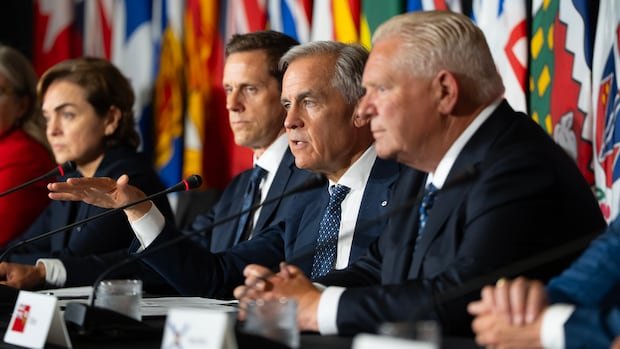

Prime Minister Mark Carney expressed that ongoing negotiations with the United States to avert imminent tariffs are intricate and high-stakes. Carney intends to engage with his American counterpart within the next 48 hours to reach a mutually beneficial agreement. At a press briefing in St. John’s, Carney refrained from divulging specifics on the negotiations publicly, emphasizing the sensitivity of the discussions.
When questioned about potential retaliatory actions if an agreement is not reached, Carney assured readiness for all scenarios. Discussions between Carney and President Donald Trump occurred on Monday, as confirmed by Audrey Champoux, a spokesperson for the prime minister, who did not provide further details on the conversation.
Trade Minister Dominic LeBlanc and chief negotiator Janice Charette engaged in extensive talks with U.S. Trade Representative Jamieson Greer to circumvent the impending Section 338 tariffs and alleviate existing Section 232 tariffs on various goods. Following a prolonged meeting with Greer and U.S. Commerce Secretary Howard Lutnick, LeBlanc mentioned that negotiations are ongoing and unfinished.
The negotiations center on reciprocal concessions between Canada and the U.S. The U.S. administration aims to reintroduce American liquor in Canadian stores and eliminate Canadian tariffs on U.S. autos, while Canada seeks the withdrawal of threatened Section 338 tariffs. Furthermore, Canada is advocating for substantial tariff reductions in sectors heavily impacted by existing levies.
Despite challenges in the negotiations, Erin O’Toole, a member of the Canada-U.S. advisory committee, noted progress in discussions. O’Toole emphasized the necessity of a fair deal for Canadian workers and economy, stressing the adverse effects of escalating tariff conflicts on both nations. In the event that the 50% tariffs proposed by Trump are enforced, Canada is prepared to respond accordingly to protect its interests.