
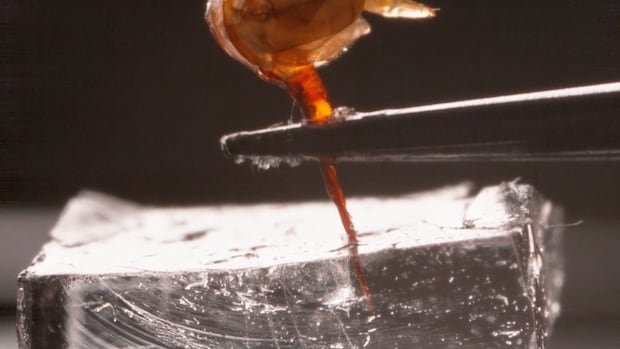

Recent research published in the Proceedings of the National Academy of Sciences has unveiled new insights into the effectiveness of the western honey bee’s stinger. The study, led by Fiorella Ramirez Esquivel, a postdoctoral researcher at Macquarie University, utilized high-speed cameras to capture the stinger in action.
By filming the stinger’s movements at hundreds of frames per second, the research team was able to observe the intricate structures within, aided by the translucent nature of the venom sac and stinger. The experiments involved live honey bees, with the stingers being removed and the bees euthanized shortly after to study the stinging process.
The study revealed a unique “double-piston design” in the bee’s stinger, where specialized valves work simultaneously to drive the stinger deeper and pump venom into the target. This mechanism, resembling a complex dance between the valves, was further explored through 3D printing to understand the fluid dynamics involved.
Juliana Rangel, an apiculture professor at Texas A&M University, expressed fascination with the study’s findings, highlighting the intricate pumping action of the bee’s venom delivery system. The research also shed light on the prolonged activity of the stinger post-release, with twitches and movements lasting up to 15 minutes.
The western honey bee’s defense mechanism, involving autotomy (leaving part of the body behind), serves the larger colony’s protection as workers sacrifice themselves for the collective good. Unlike other bees, the barbed stinger of the worker honey bee remains embedded, aiding in defense and pheromone signaling to recruit other bees in the colony.
The implications of this study extend beyond bee biology, potentially offering insights for medical applications. Lauren Ponisio, an ecologist at the University of Oregon, noted the historical significance of human interactions with bees and highlighted the study’s contribution to understanding bee behavior. The research opens avenues for exploring differences in stinging mechanisms among bee species and their evolutionary significance.