
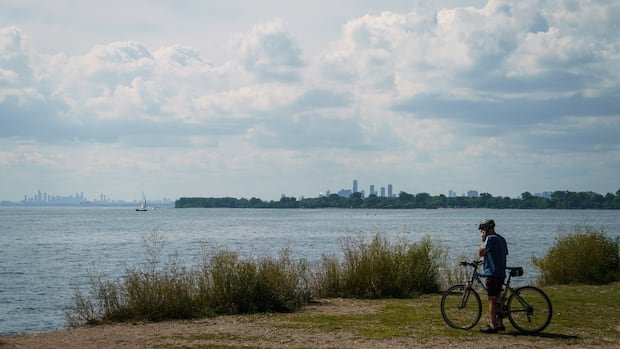

The Great Lakes, a significant reservoir of freshwater serving around 40 million individuals, have historically represented the close connection between Canada and the U.S. President Donald Trump, in the midst of a trade dispute with Canada, issued an executive order on Thursday aiming to rename Lake Ontario as Lake America.
The feasibility of Trump unilaterally changing the lake’s name, established long before European settlement, remains uncertain, given its international recognition over centuries. This action aligns with the broader stance of the Trump administration, impeding collaborative efforts between the U.S. and Canada in Great Lakes research and restoration initiatives.
“The current U.S. administration’s outlook on the environment and science is disheartening,” noted Aaron Fisk, a professor at the University of Windsor’s Great Lakes Institute for Environmental Research. The administration’s budget reductions have significantly impacted vital U.S. scientific agencies like the National Oceanic and Atmospheric Administration and the Environmental Protection Agency, affecting research and monitoring activities in the Great Lakes.
Joel Brammeier, CEO of the Alliance for the Great Lakes, emphasized the necessity of U.S.-Canada cooperation in managing and preserving the shared Great Lakes waters, emphasizing the futility of challenges to this collaboration.
Despite substantial funding cuts, bipartisan support has safeguarded crucial Great Lakes programs. The Great Lakes Restoration Initiative, initially threatened with elimination by Trump, received backing from both Democratic and Republican representatives in the U.S. House of Representatives.
Climate change poses additional threats to the Great Lakes, with shifting weather patterns impacting water availability and demand. Mike Shriberg, from the University of Michigan’s Water Center, highlighted emerging challenges, including altered water flows due to climate change and potential strains from increased migration to the region.
Looking ahead, Andrew Gronewold, a professor at the University of Michigan, emphasized the necessity of addressing future demands for Great Lakes water usage. Efforts to fortify the Great Lakes compact and agreement, governing water usage among U.S. Great Lakes states, Ontario, and Quebec, are crucial in preparing for heightened external pressures on water resources in the basin.