
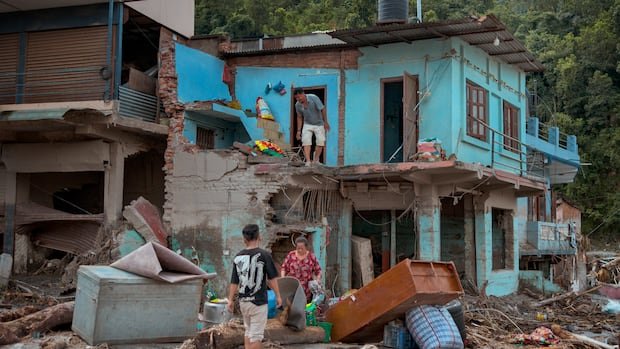

Thirty-two Canadian citizens and permanent residents are among around 2,000 individuals unaccounted for following a catastrophic flash flood along the Himalayan border between Nepal and Tibet, as confirmed by Foreign Affairs Minister Anita Anand on Friday. Anand, in a media briefing, disclosed that the area had recorded 579 fatalities with 1,924 people still missing, including 517 foreign nationals. Fortunately, no Canadians have been confirmed deceased. She emphasized the dire humanitarian crisis in Nepal due to the massive damage caused by the disaster.
Canada announced a $5 million emergency relief fund to aid Nepal in the wake of the devastating flood. Rescue operations continued on Friday, with teams navigating through mud and debris in the severely impacted areas to locate the missing individuals. Nepalese and Chinese authorities issued warnings about potential additional flooding from an overflowing lake formed upstream post the calamity, urging residents in vulnerable regions to relocate to safer areas.
The National Disaster Risk Reduction and Management Authority of Nepal reported that 3,742 people had been rescued. The missing persons include tourists from various countries. The Nepalese army deployed a team to the Upper Trishuli-1 Hydropower Project near the Nepal-China border to search for individuals reportedly trapped inside a tunnel. The rescue mission faced challenges due to the difficult access to highly affected communities, as highlighted by Santosh Pandey, Oxfam’s humanitarian lead in Nepal.
As rescue efforts persist to save remaining survivors, families anxiously gather around hospitals, hoping to identify their loved ones among the recovered bodies. At the Tribhuvan University Teaching Hospital, relatives scan through distressing images displayed outside the forensic identification unit, showcasing the tragic state of the victims pulled from the mud. Nirmala Sapkota Koholi, a resident of Lalitpur, fervently searches for her younger brother, Pradip Kumar Sapkota, who went missing while working as a driver with a group of pilgrims during the disaster.
Red Cross officials raised concerns about a potential secondary flood and mentioned a temporary halt in rescue operations due to blocked relief supply trucks. David Fisher, head of delegation for the International Federation of Red Cross and Red Crescent Societies in Nepal, emphasized the urgent need for aid in assisting the approximately 93,000 affected individuals. The affected areas, known for hiking and religious pilgrimages, witnessed a massive influx of flood survivors, including the injured.
Survivor accounts shed light on the harrowing experiences during the catastrophe. Customs officer Karbir Gaire described the terrifying moments in Timure, the nearest Nepalese village to the Tibetan border, where he narrowly escaped the disaster. Gaire’s recollection of the events highlighted the sudden onset of the flood triggered by a glacier collapse, causing a seismic event. The survivor vividly portrayed the chaos and destruction, likening the disaster to a Hollywood movie scene in the vibrant town of Timure.
The unfolding tragedy in Nepal has prompted global attention and aid efforts, with ongoing rescue operations striving to locate the missing individuals and support the affected communities.