
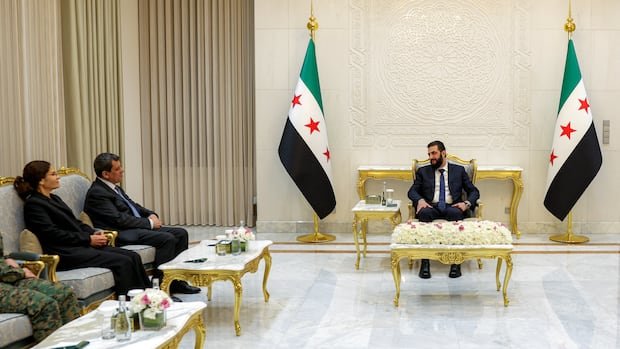

Syrian President Ahmed al-Sharaa has appointed the former leader of a Kurdish-led military group, which has since disbanded, as a presidential advisor in a move signaling a reconciliation between the two historical adversaries in the civil conflict. For over ten years, Mazloum Abdi commanded the Syrian Democratic Forces (SDF), a Kurdish-led faction that collaborated with the United States against the Islamic State, capturing vast territories in the northern and eastern parts of Syria to establish a semi-autonomous region.
Following the removal of former President Bashar al-Assad in late 2024 by a rebel alliance led by Sharaa, the new authorities in Syria, led by Islamists, insisted on the integration of SDF-controlled regions and institutions into the state framework. Although the integration process faced delays for more than a year, a swift offensive by Syrian government forces against Abdi’s fighters in January paved the way for a plan to merge the SDF with the central authorities in Damascus.
Abdi recently announced the formal dissolution of the SDF, marking the beginning of a new chapter focused on “peace and contributing to the rebuilding of the new Syria.” Sharaa issued a decree appointing Abdi as a presidential advisor, although the specific responsibilities of this role remain unclear at this point.
Under Abdi’s leadership, the SDF introduced governance structures that promoted gender equality by having co-chaired positions filled by both male and female representatives. The group actively combated extremist factions like the Islamic State and the local branch of al-Qaeda, which was previously led by Sharaa before his disassociation from the organization.
As part of the integration process, SDF fighters are being absorbed into Syria’s Defense Ministry, including key figures who had been critical of the ruling Syrian regime. The fate of female SDF fighters and their integration into the predominantly male Syrian armed forces is yet to be determined.
Turkey, a key ally of President Sharaa, has welcomed the dissolution of the SDF, accusing the group of having ties to the outlawed Kurdistan Workers’ Party (PKK). The move signifies a significant shift in the dynamics of the Syrian conflict and paves the way for further developments in the war-torn region.