
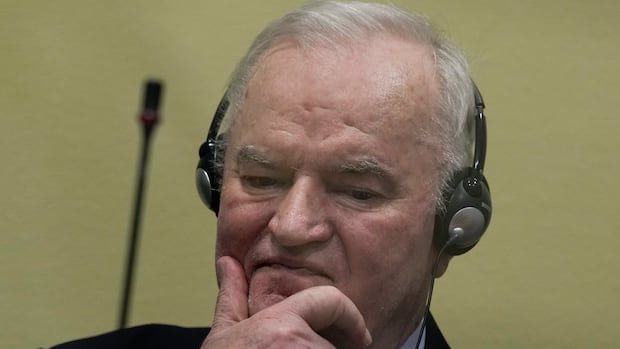

Ratko Mladic, who was found guilty of genocide for masterminding the massacre of over 8,000 Muslims in 1995, the worst such incident in Europe since World War II, has passed away. Mladic’s lawyer, Dragan Ivetic, confirmed his death in UN custody, citing no specific cause. The former general had been receiving medical care in the hospital section of the UN detention facility located in a suburb of The Hague during his final months.
The brutal slaughter in Srebrenica marked the climax of a conflict that lasted more than three years. Mladic relentlessly bombarded the besieged capital Sarajevo with heavy artillery, tanks, and gunfire, resulting in the deaths of 10,000 individuals. The victims from Srebrenica were hastily buried in mass graves over a four-day period in July 1995, with some remains later moved to remote areas in an attempt to conceal the evidence of the atrocities.
The United Nations International Criminal Tribunal for the former Yugoslavia (ICTY) concluded that the objective behind the massacre was “ethnic cleansing,” aimed at forcibly expelling Bosnian Muslims, Croats, and other non-Serbs to create a Greater Serbia. Mladic, alongside Serbian President Slobodan Milosevic and Bosnian Serb political leader Radovan Karadzic, was deemed complicit in a criminal plot to execute this plan.
Despite his conviction and sentencing to life imprisonment in 2017, Mladic vehemently rejected the court’s authority, denouncing the verdict as fabricated during his trial. His accomplice, Karadzic, was also convicted of genocide in 2016. Both Mladic and Karadzic remained at the top of the ICTY’s most-wanted list until Milosevic was overthrown in 2000, after which Mladic lived discreetly in Belgrade until his arrest in 2011.
Mladic’s military tactics in Bosnia were characterized by extreme brutality. Prisoners were subjected to inhumane treatment, including starvation, rape, and execution. The atrocities committed by Mladic’s forces left a lasting impact on the survivors and victims’ families, such as Munira Subasic, whose son and husband fell victim to the Bosnian Serb forces.
Mladic’s capture in 2011 marked the end of his reign of terror, as he surrendered without resistance due to health issues. Despite his once formidable presence, deteriorating health and multiple legal setbacks led to his unsuccessful appeals for release on compassionate grounds. His passing signifies the closure of a dark chapter in European history marred by violence and ethnic cleansing.