

Experts are forecasting a gradual increase in house prices next year following a recent slowdown, as per the latest data from mortgage provider Halifax. Average property prices showed minimal growth in November, edging up by £138 to reach a new peak of £299,891, inching closer to the £300,000 milestone.
Market analysts attribute the sluggish growth to pre-Budget uncertainties, dampening market enthusiasm. However, with expectations of a potential Bank of England interest rate cut in the near term, economists anticipate a rebound in price growth early next year.
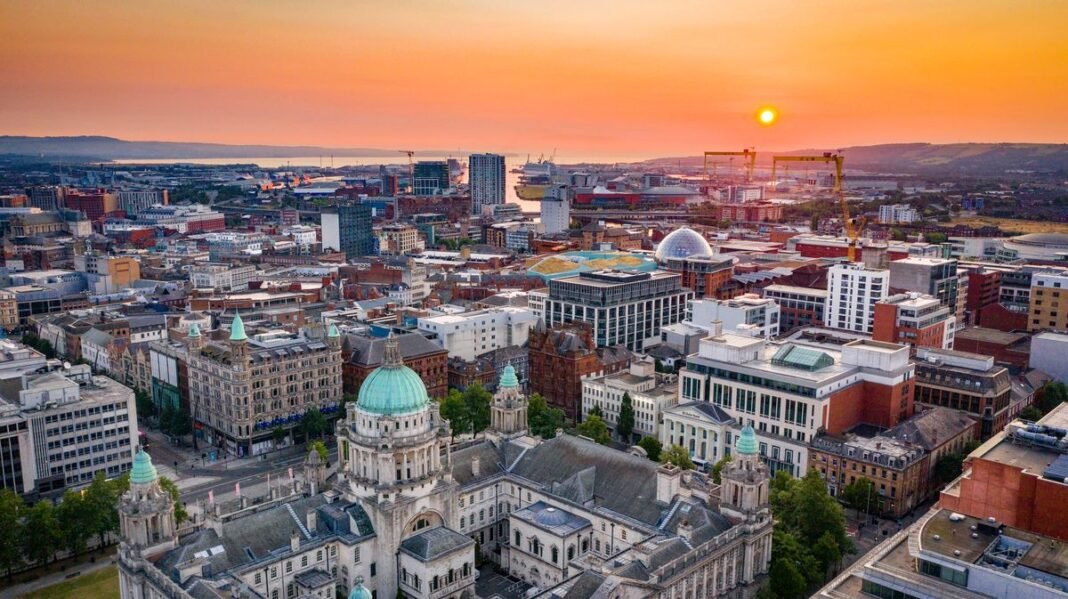
While national house prices remained stable, regional disparities were evident. Northern Ireland witnessed a notable surge of nearly 9% in average property prices year-on-year, reaching £220,716 in contrast to a 7.9% increase in October. This surge can be attributed to a housing supply deficit in the region, as highlighted by a report from Danske Bank earlier this year.
In contrast, Greater London continued to struggle, experiencing a 1% decline in average prices to £539,766 last month.
The overall annual price growth across the UK decelerated significantly in the previous month, dropping from 1.9% to 0.7%. Halifax’s head of mortgages, Amanda Bryden, noted this slowdown to be the weakest since March 2024, primarily reflecting the base effect of stronger price growth seen a year ago.
Bryden emphasized that despite the recent changes in stamp duty and pre-Budget uncertainties, property values have remained steady. While slower growth might disappoint some current homeowners, it is positive news for first-time buyers, with affordability reaching its strongest level since late 2015 when comparing property prices to average incomes.
Looking ahead, with stable market activity and expectations of further interest rate cuts, Halifax anticipates a gradual increase in property prices heading into 2026.
Scotland recorded an annual house price growth of 3.7% in November, with the average property value standing at £216,781. In Wales, average property values climbed by 1.9% year-on-year to reach £229,430. The North West of England led in annual growth rate with a 3.2% increase to £245,070. Despite the decline, London remains the most expensive area in the UK.
Industry experts highlighted the varying regional performances within the housing market, with disparities between the northern and southern parts of the country accentuated by affordability concerns.
Regarding market conditions, the higher supply of homes compared to the previous year is influencing buyer choices and tempering price growth in the short term, according to industry insiders.
Mortgage expert Karen Noye underscored that post-Budget clarity has provided borrowers with a clearer outlook for early 2026, although affordability remains a significant challenge. Noye pointed out that while fixed rates have decreased, slow progress and high living costs are limiting borrowing capacity, particularly for first-time buyers.
Looking ahead, personal finance expert Sarah Coles noted the stagnation in house prices, emphasizing the impact of uncertainty on market dynamics. However, she expressed optimism for a potential market uptick in the new year, supported by expectations of a rate cut and falling mortgage rates.
Average house prices and annual changes, as per Halifax: