
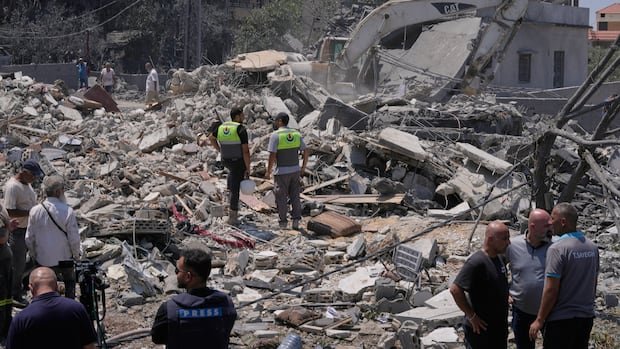

Israeli airstrikes in southern Lebanon resulted in the deaths of at least 11 individuals on Saturday, marking some of the most lethal attacks since the fragile truce between Israel and Hezbollah commenced in June.
Reports from Lebanon’s Health Ministry and state news agency indicated that one airstrike, targeting a residence on the outskirts of Ansar village, claimed the lives of seven people, including three children, and left two others injured. Another strike in Deir al-Zahrani village resulted in four fatalities and 17 injuries.
Following a “framework agreement” announced on June 26 by Israel and the Lebanese government, outlining plans for Israeli forces to withdraw from southern Lebanon in exchange for Hezbollah’s disarmament, tensions have persisted. Despite efforts towards a potential peace agreement between the two nations, which technically remain in a state of war nearly eight decades after Israel’s establishment, Hezbollah has refrained from direct negotiations and was not party to the deal.
Israeli Prime Minister Nawaf Salam condemned the recent airstrikes as detrimental to stability in the region, emphasizing that the victims were not military targets and calling on Israel to cease its escalation. Lebanese President Joseph Aoun viewed the strikes as a clear message against ongoing negotiation efforts and American-backed initiatives to implement the agreement.
In response to the attacks, Hezbollah urged the Lebanese government to prioritize halting the aggression over pursuing talks with Israel, accusing the U.S. of complicity in Israeli actions. The group warned Israel that its aggressive behavior would be met with appropriate responses.
The latest round of Israeli airstrikes targeted the strategic Ali Taher hill, overlooking parts of Nabatiyeh city, despite the existing truce. The Israeli military justified the strikes as retaliatory measures against alleged actions targeting Israeli soldiers in the area, vowing to protect Israeli civilians and soldiers from threats posed by Hezbollah.
The recent violence underscores the challenges in the region, with ongoing tensions and sporadic outbreaks of conflict jeopardizing the fragile peace. Efforts to navigate the complex dynamics between the involved parties continue as Lebanon and Israel grapple with longstanding issues and the specter of past conflicts.