

A former CIA operative has pinpointed a European city as a potential target for a “non-traditional” nuclear attack. Amid escalating global tensions involving the Russo-Ukrainian conflict, the China-Taiwan dispute, and the recent US seizure of Venezuelan president Nicolás Maduro, the year 2026 is perceived as an increasingly dangerous period.
Andrew Bustamante, a former CIA intelligence officer with experience in the US Air Force and nuclear Intercontinental Ballistic Missile (ICBM) operations, is well-equipped to provide insights on these tensions. Currently hosting the EverydaySpy podcast, Andrew maintains a consistent stance on monitoring conventional nuclear threats.
While Andrew deems the likelihood of a nuclear-tipped ICBM attack in 2026 as highly improbable, he warns of a more concerning scenario involving a covert non-traditional nuclear explosion, like a dirty bomb or a smuggled nuclear warhead. He emphasizes the potential chaos and challenges in responding to such an attack, compared to a conventional nuclear strike.
In his analysis, Andrew dismisses the possibility of Russia launching a nuclear strike using an Oreshnik missile but suggests a higher probability of a covert attack, such as a nuclear explosion in Kyiv delivered through unconventional means. He highlights the complexities and implications of investigating and responding to such an incident, underscoring the need for swift and decisive action.
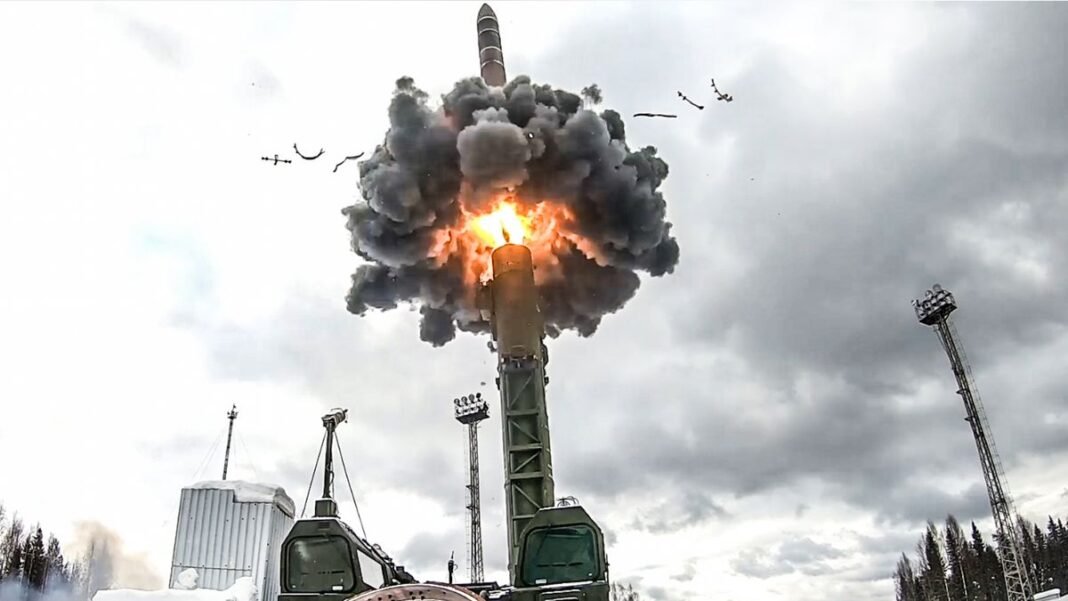
Andrew explains that the use of a ‘dirty bomb’ combines explosive materials with radioactive substances, posing a unique threat. He also touches on the Oreshnik missile, an intermediate-range hypersonic weapon capable of striking multiple targets simultaneously.
Regarding Russia’s strategic choices, Andrew argues that deploying a nuclear-capable Oreshnik missile would not serve Russia’s best interests due to potential escalations. Instead, he suggests a scenario where a nuclear device is smuggled into a third country to create confusion and delay the international response.
In a chilling prediction, Andrew estimates a 25% likelihood of a nuclear event occurring in the future, albeit not in the traditional manner. He envisions unconventional methods like a shoulder-launched nuclear missile in the South China Sea to disrupt military operations with an electromagnetic pulse (EMP) effect.
Andrew concludes by emphasizing the unpredictable nature of future nuclear threats, urging vigilance and readiness to address evolving security challenges.