
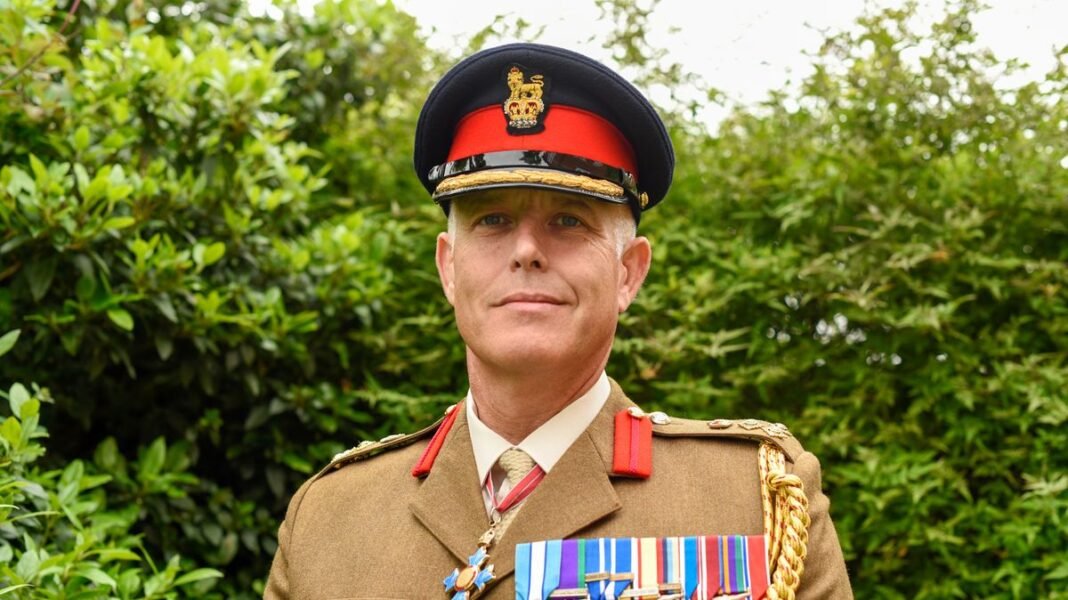

Gareth Collett was deeply impacted by the IRA bombings in Hyde Park and Regent’s Park on July 20, 1982. The tragic event, which resulted in the deaths of 11 military personnel and seven horses, inspired the 16-year-old to pursue a career in bomb disposal.
Reflecting on the bombings, Gareth expressed shock and anger at the senseless loss of lives, both human and animal. This led him to contemplate the motivations behind such acts of violence and sparked a desire to assist in similar crisis situations.
Over the course of 34 years, Gareth, now a retired Brigadier, has been involved in various war zones, investigated war crimes, engaged in conversations with the late Queen, and successfully neutralized 75,000 explosive devices. Despite saving countless lives, his experiences also led to him suffering from PTSD.
Now 59 and residing in London, Gareth, a fluent Arabic speaker, has penned a fictional book titled “Blasted Religion,” drawing from his own bomb disposal career. The writing process served as a therapeutic outlet for him, prompting him to consider documenting his life story next, subject to Official Secrets Act clearance.
Coming from a family with a military background, Gareth’s interest in the Army was influenced by his grandfathers and father, who had served in World Wars. Unlike traditional military roles, Gareth was drawn to bomb disposal as a means of preserving life rather than taking it.
Following specialized ordnance training, Gareth honed his skills as an ammunition technical officer at the Army School of Ammunition. He emphasized the complexity and precision required in bomb disposal operations, highlighting the critical role of thorough assessment and strategic decision-making.
While popular media often romanticizes bomb disposal, Gareth stressed the stark reality of the job, noting the lack of simple solutions like those portrayed in fictional depictions. He emphasized the rigorous training regimen and the high stakes involved, where a single mistake could prove fatal.
Having served in diverse conflict zones, including Northern Ireland, Iraq, Afghanistan, and Kosovo, Gareth highlighted the unique challenges faced in each theater of war. He underscored the evolving nature of threats and the constant vigilance required in bomb disposal operations.
Gareth’s experiences in bomb disposal and subsequent diplomatic roles led him to uncover the intricate networks behind terrorism financing. His efforts to trace the origins of bombs and identify perpetrators underscored the complex web of international terrorism funding.
Struggling with PTSD due to his traumatic experiences, Gareth found solace and support through organizations like Help for Heroes’ Hidden Wounds team, specialized in mental health care for veterans. This assistance allowed him to confront his traumas and acknowledge the toll his service had taken on his well-being.
Currently serving as an Executive Director at the University of Wales Trinity Saint David, Gareth imparts his expertise in ordnance, munitions, and explosives to aspiring professionals. Despite the challenges and sacrifices of his career, Gareth remains resolute in his commitment to saving lives.
Research conducted by Gareth into the health risks faced by bomb disposal personnel revealed a concerning trend of increased bladder cancer incidence among veterans. His own battle with bladder cancer underscored the potential health hazards associated with exposure to explosives.
Driven by his personal experiences, Gareth’s ongoing research aims to shed light on the health implications faced by bomb disposal experts and contribute to a better understanding of the risks associated with their line of work.