
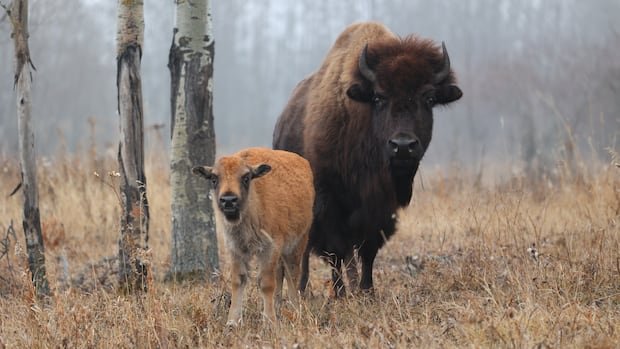

A vast number of bison once roamed North America in large herds characterized by their rust and auburn fur before facing near-extinction due to relentless hunting. New research on bison DNA has shed light on the species’ decline and the subsequent slow return of herds to their former habitats, revealing significant genetic changes over the past 20,000 years.
The study, featured in the journal Science, involved the sequencing of 160 bison genomes by an international team of nearly 40 scientists, spearheaded by paleogeneticist Jonas Oppenheimer from the Paleogenomics Lab at the University of California, Santa Cruz. Their work aimed to provide insights for modern conservation efforts by unraveling the complex genetic history of bison populations.
Historically, bison were genetically homogeneous across North America. However, today’s bison display remarkable genetic diversity, reflecting the impact of past human-driven population bottlenecks. The research found that modern bison herds, now fragmented and genetically distinct based on their origins, face challenges to their resilience.
The genome sequencing, which encompassed ancient and modern bison DNA, highlighted how genetic diversity within the species has evolved over time. The study included DNA samples from managed herds in Canada and the United States, as well as ancient specimens sourced from collections in various countries.
Furthermore, the research emphasized the critical importance of preserving the genetic distinctiveness between wood bison and plains bison, which diverged around 3,000 years ago due to environmental changes. Efforts to manage and conserve these distinct bison subspecies separately are essential for their long-term survival and genetic integrity.
The study’s findings provide valuable information for conservationists to facilitate genetic matchmaking among isolated bison herds, reducing the risks of inbreeding and safeguarding genetic diversity. By utilizing ancient genomes as reference points, researchers aim to restore gene flow among bison populations, enhancing their ability to adapt and thrive in diverse environments.
Overall, this study underscores the significance of genetic research in guiding conservation strategies and ensuring the survival of bison populations amid ongoing environmental challenges.