
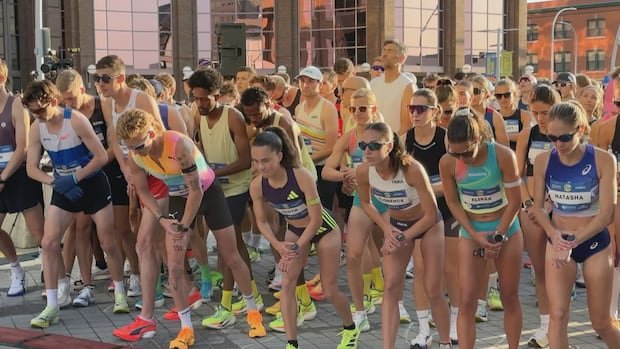

After the completion of the Edmonton Marathon, the race director has issued an apology following the discovery of an error in accounting for detours, resulting in the race courses being longer than anticipated. This confirmation aligns with the suspicions raised by many participating runners.
In a statement released on Tuesday, Tom Keogh, the race director of the Edmonton Marathon, revealed that the half-marathon and marathon courses were found to be 674.7 meters longer than initially believed due to miscalculations in detour-related adjustments. Keogh expressed regret for the oversight and admitted that the previous confidence in the course certification process was based on the information available at that time.
Keogh took full responsibility for the error, emphasizing the thorough review conducted by event officials. He detailed that while the detour at Wellington Bridge added extra distance, the adjustments made at the west end turnaround point were insufficient to offset the detour’s extension.
Concerns about the race distances were raised by elite and amateur runners before the statement was issued. Despite earlier claims of accurate measurements, Keogh acknowledged the error and the impact it had on participants striving for qualifying times, including those aspiring to compete in prestigious events like the Boston Marathon.
One such runner, Mitch Walz from Calgary, who had trained rigorously for the Edmonton Marathon, shared his emotional journey of achieving a time that met the Boston Marathon qualifying standard, only to have it questioned due to the course error. Walz expressed disappointment but also a sense of pride in his performance.
Keogh assured participants that steps would be taken to prevent similar errors in the future by reviewing certification processes with partners. Meanwhile, the Boston Athletic Association indicated that adjusted results might be considered if participants met qualifying standards despite running a longer distance, offering a glimmer of hope for affected runners like Walz.
Looking ahead, lessons learned from this incident will guide the Edmonton Marathon’s efforts to ensure the accuracy and integrity of future race courses, fostering trust and fairness for all participants.