

On a dark Saturday evening in late August, following an exhibition match against the Miramichi Timberwolves, the Chaleur Lightning hockey team embarked on their journey back to Bathurst aboard their team bus. Assistant coach Alex Ouellet recounted the moment when the driver’s sudden gasp alerted them to an impending collision with a moose on the highway just minutes into the drive. Fortunately, aside from a few scratches on the driver, the team and coaches escaped unharmed from the unexpected encounter.
The experience of facing a large animal on the road left a lasting impression on Ouellet and the team, similar to many others in New Brunswick who have encountered such situations. Coincidentally, the same week witnessed the announcement of two additional wildlife crossings being added to the highway where the incident occurred.
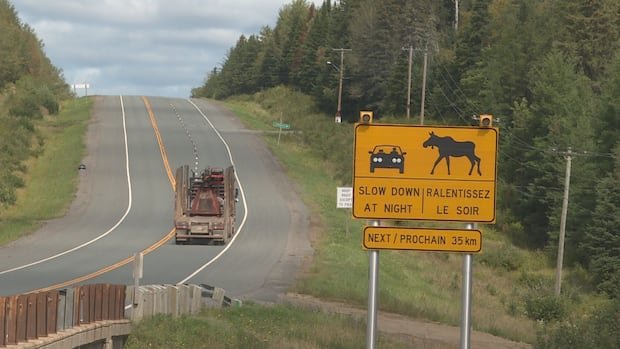
The province employs various strategies to deter moose from straying onto roadways, including wildlife fencing and crossings. Transportation Minister Chuck Chiasson explained that the decision on where to place these measures is based on collision data provided by law enforcement to identify high-risk areas. Presently, both sides of 331 kilometers of New Brunswick highways are lined with wildlife fencing to minimize wildlife-related accidents.
In an effort to ensure safer wildlife passage, New Brunswick has 82 wildlife crossings, including two new tunnels recently constructed on Route 8 between Miramichi and Bathurst. These tunnels, over four meters tall and wide, consist of 11 pre-fabricated concrete segments. Wildlife ecologist Graham Forbes, who conducted research on earlier tunnels, emphasized the importance of design to allow animals to intuitively use them to navigate safely across highways.
Forbes discovered that various wildlife, not just large mammals, utilized the tunnels, showcasing their effectiveness in promoting safe animal passage. Although the Department of Transportation has not observed a significant decrease in collisions due to the tunnels, their primary goal remains ensuring road safety by strategically implementing mitigation measures in collision-prone areas.
Despite the ongoing risk of moose-related incidents on the highway, Ouellet expressed hope for additional fencing in the region, recognizing the limitations in completely preventing collisions. He emphasized the importance of taking proactive measures to mitigate risks and enhance safety on roadways frequented by wildlife.