
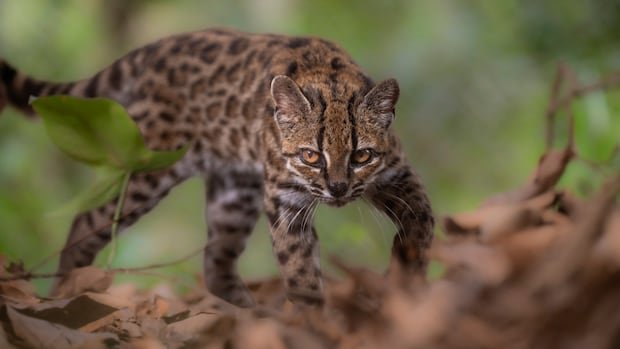

A small wild feline species residing in the cloud forests of Bolivia has been recognized as a previously unidentified species. This discovery marks the first formal naming and description of a new living cat species in over a century. Referred to as Tilcayo by local communities, this cat belongs to a group known as tiger cats found in various parts of South America. The cat was discovered in Bolivia’s Yungas forest, a mountainous area characterized by cloud-covered forests and high humidity. Measuring approximately 46 centimeters (18 inches) in length and weighing around three pounds, Tilcayo is smaller than the typical domestic cat.
Researchers utilized genetic data to establish that this feline is indeed a new species and assigned it the scientific name Leopardus tilcayo, while retaining its local moniker. Described as having light brown fur with irregular rosettes across its body, the cat’s biology and habits are still largely unknown. Initial findings from scat samples suggest that small rodents may be part of its diet, and camera-trap evidence indicates it may be more active during nighttime.
Tiger cats are considered cryptic species, making them difficult to distinguish based solely on appearance, according to evolutionary biologist Jonas Lescroart of the University of Antwerp in Belgium. Previous studies had grouped tiger cats as a single species, but genetic research conducted years ago hinted at the presence of multiple species within this group.
The newly identified species has only two known live individuals at present. One of these individuals, a 10-year-old male, currently resides in the Senda Verde Wildlife Sanctuary after being kept in a local household. The unique characteristics of the Bolivian cat sparked curiosity among researchers, leading to a comprehensive DNA analysis of 38 cats sampled from various South American countries, including museum specimens. This study revealed that tiger cats comprise five genetically distinct species.
The researchers have informed the International Union for Conservation of Nature about their findings. The upcoming review by the IUCN will assess the five distinct lineages separately, potentially leading to a more accurate evaluation of the species’ conservation status. The Tilcayo species and others could be classified as endangered when assessed individually.
The Yungas region, where these felines are found, faces significant environmental threats including deforestation, agricultural expansion, fires, and mining activities. Urgent measures such as restoring damaged forest patches, safeguarding native forests, and maintaining habitat connections are crucial for the preservation of these species. The study’s senior author, evolutionary biologist Eduardo Eizirik, emphasized the importance of recognizing the existence of undiscovered species and the need to protect them from extinction.