
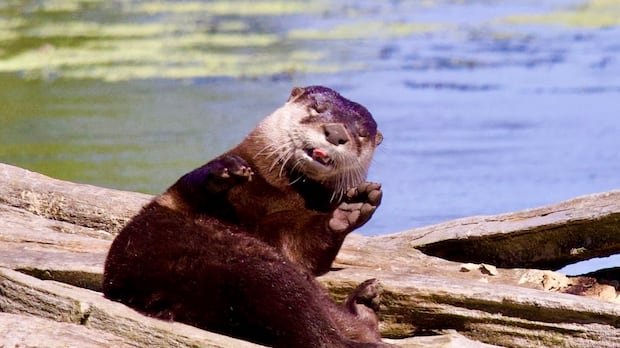

Wildlife enthusiast Terry Chettle was capturing images of a green heron at the Grimsby Wetlands in early August when he and the bird were both taken aback by an unexpected visitor. “Out of the blue, this river otter began teasing the heron,” shared Terry, a resident of Beamsville, Ontario.
According to Chettle, the presence of the otter was a surprise as they are not commonly seen in the area. Seizing the opportunity when the otter moved to a log to groom itself, he snapped a picture. “It really put on a display for me,” mentioned Chettle, recalling the playful gestures it made.
On the same day, Bruce and Laurie Mackenzie were strolling through the wetland when they crossed paths with Chettle, who pointed out the otter. Bruce Mackenzie acknowledged the rarity of the find, stating that as far as he knows, the sighting on August 3 was the first near the wetlands in recent history. He added that no one has reported spotting the otter since that weekend.
The Grimsby Wetlands, previously used by the Niagara Region for sewage storage, are now managed by the Hamilton Naturalists’ Club, covering approximately 12 hectares along Lake Ontario’s South Shore. Mackenzie, who works with the club as a project manager for the wetlands, emphasized that the otter sighting reflects positively on habitat restoration and water quality, noting previous sightings of rare species like least bitterns, a threatened small heron species in Ontario.
Laura Timms, a program manager at Credit Valley Conservation specializing in natural heritage management, described otters as a conservation success story. She highlighted the efforts to revitalize degraded environments into healthy habitats, leading to a rebound in otter populations across North America.
River otter populations faced significant declines in the 1800s due to hunting, habitat destruction, and poor water quality. However, recent trends show a resurgence in otter sightings, with documented reports becoming more common. Timms pointed out the importance of ongoing efforts to restore and protect habitats to ensure the thriving of various species, not just otters.