
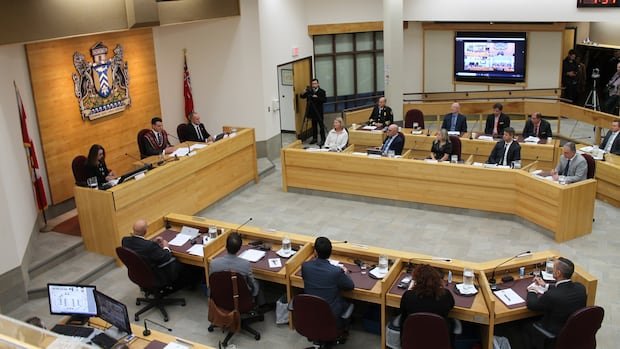

After a 90-minute debate on Monday evening, city council members in Sault Ste. Marie rejected a proposal to stop new data center projects in the Northern Ontario city. The discussion centered around contentious artificial intelligence facilities following a local petition that opposed a cybersecurity monitoring and training center, including a data center, approved in December 2025 for the city’s west end.
Led by Protexxa and Missanabie Cree First Nation, the project aims to utilize AI for identifying and resolving cyber issues for various organizations and governments. Ward 3 Councilor Angela Caputo suggested an interim control bylaw to pause new data center proposals until additional policies and protocols were established, emphasizing community-informed decision-making.
However, Mayor Matthew Shoemaker and other councilors hesitated over the specifics of the moratorium proposed by Caputo, leading to the withdrawal of the motion. Instead, a new motion is anticipated to be presented at the upcoming meeting on August 31, directing city staff to develop a specific municipal framework for data centers in the city, with opportunities for public input.
The potential decision is unlikely to impact the approved Protexxa data center project on Yates Avenue in the city-owned industrial park, pending the finalization of the property sale. During the debate, Shoemaker cautioned against treating all data centers alike, distinguishing between “hyperscale” facilities and the proposed five-megawatt consumption by Protexxa.
City officials highlighted the existing power capacity to support the planned facility, noting that the city’s electricity utility could accommodate the demand. The city’s planning director, Peter Tonazzo, emphasized existing office and institutional uses benefiting from similar-sized server rooms. City CAO Tom Vair highlighted the requirement for rezoning any proposed data centers through council approval.
Shoemaker argued against a moratorium on future data center proposals, citing the existing processes to evaluate and approve such applications, including infrastructure capacity and environmental considerations. He stressed the importance of enhancing the existing decision-making process rather than undermining previous approvals.