
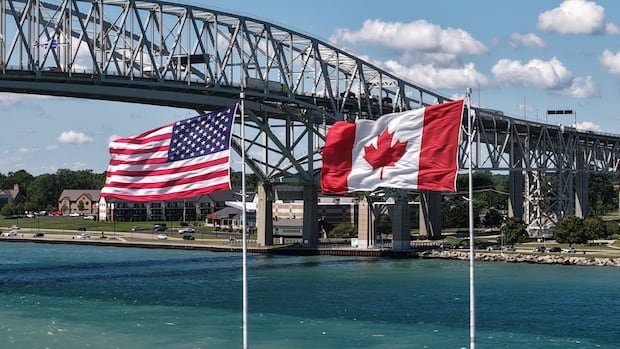

The recent move by the White House escalated tensions in the ongoing Canada-U.S. trade conflict by imposing a ban on Canadian dairy, motorcycles, and certain alcohol products. Alongside fresh 50 per cent tariffs on various items, these actions have raised concerns about their impact on the Canadian economy.
Economists have analyzed the situation and concluded that the bans and tariffs, affecting an estimated $3 billion worth of Canadian goods, may not have a significant overall impact on Canada’s economy, which exported over $527 billion worth of goods to the U.S. in 2025. Although these measures may not cause substantial damage, they are unsettling for certain industries and do not provide assurance to business owners.
The White House’s response to Canada’s counter-tariffs included the addition of 50 per cent tariffs on products like mattresses and paper, while removing tariffs on items such as toilet paper, cement, and sugar. According to Derek Holt, an analysis indicates that the bans on alcohol, dairy, and motorcycles will have minimal effects as Canada exports limited dairy and motorcycles to the U.S. Alcohol exports, amounting to $550 million last year, might see a slight impact, affecting about $700 million worth of Canadian exports to the U.S.
Chief economist Doug Porter from BMO concurs, stating that the value of newly tariffed items and those removed from the list both total around $2 billion, essentially maintaining the status quo. However, the targeted industries or regions will undoubtedly face challenges, causing concerns for business owners.
The escalating trade measures, though seemingly impactful, may not be as damaging as the rising oil prices due to tensions in the Middle East. The uncertainties arising from the U.S. actions, implemented swiftly without much warning, pose a greater risk to businesses than the direct economic impacts.
While the bans and tariffs may have limited direct effects, the broader repercussions on business confidence and uncertainty could be more substantial. The immediate implementation of some measures leaves little time for businesses to adapt or explore alternative markets, adding to the apprehensions faced by businesses on both sides of the border.