
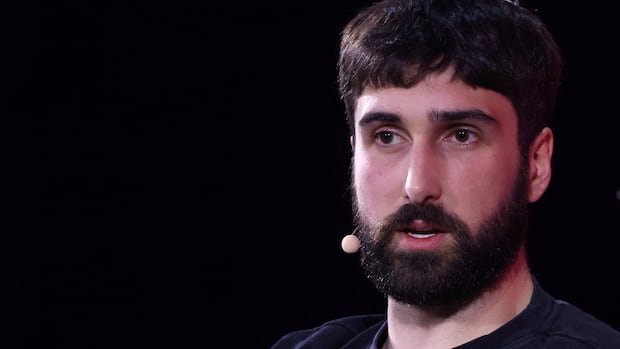

The CEO of a notable artificial intelligence company in Canada is advising the public against succumbing to “fear tactics,” referencing the recent controversy surrounding an Anthropic researcher suggesting a more than 10% likelihood of AI causing harm to humanity within ten years. Aidan Gomez, from Cohere based in Toronto, emphasizes the importance of establishing new AI protections while also considering the benefits such as cost reduction and medical advancements.
Gomez dismisses discussions of extinction risk as fearmongering, attributing them to science fiction narratives like “Terminator” that evoke fear and misunderstanding. He questions the 10% extinction risk figure, stating it lacks scientific basis and is merely a subjective opinion. While Gomez aligns with Prime Minister Mark Carney’s proposal for a global oversight body to manage AI risks, he believes that Canada, alongside the U.S., China, and France, holds a significant position in the global AI landscape due to its early research contributions.
Expressing pride in Canada’s technological achievements, Gomez emphasizes the need for responsible deployment of AI globally, particularly given Canada’s historical investment in AI research. Cohere, specializing in generative AI models, has secured partnerships with the federal government and Bell Canada. Gomez’s sentiments were shared at an investment summit led by Prime Minister Carney, aiming to attract substantial investments over the next five years, including projects like a $14.5 billion data center in Alberta and Bell Canada’s expansion plans in Regina.
As discussions on AI safety intensify, Evan Solomon, the federal minister for AI and digital innovation, emphasizes the government’s commitment to ensuring safety and fostering opportunities in AI technology. Solomon hints at an upcoming announcement with Canadian AI pioneer Yoshua Bengio regarding AI safety collaborations involving Germany. The government aims to implement safety guidelines and regulations to protect citizens while capitalizing on the benefits of AI technologies.
Jas Jaaj, the global AI markets and ecosystems leader at Deloitte Canada, acknowledges the challenges in establishing international AI safeguards but remains optimistic, drawing parallels to past global collaborations in scientific advancements. Amidst growing concerns, industry leaders like Dario Amodei and Sam Altman advocate for safety measures in AI development to prevent potential risks. However, Gomez opposes industry-led oversight, labeling it as fear tactics aimed at monopolizing the sector.
In the evolving landscape of AI regulation, stakeholders like Paul Samson and Emily Osborne stress the importance of sovereignty and data protection in foreign investments, emphasizing the need for strategic safeguards. As global discussions on AI safety and regulation continue, the balance between innovation and responsible governance remains a focal point for industry and government leaders alike.