
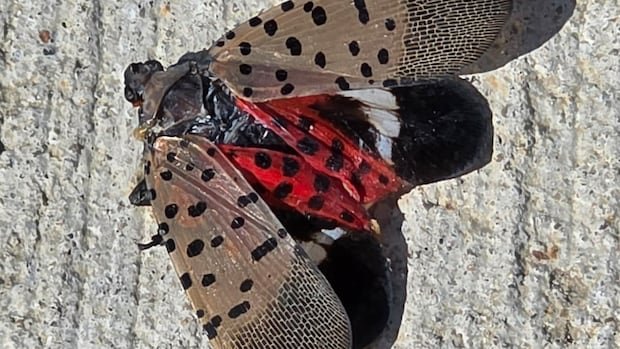

An insect species that poses a threat to grapevines and various other crops and trees has been identified in Canada for the first time by the Canadian Food Inspection Agency (CFIA), with the initial detection occurring in Windsor. The spotted lanternfly, known for its destructive impact on grapevines, was previously spotted by residents in Windsor, as reported by a non-profit organization dedicated to preventing the spread of invasive species. However, this recent detection marks the first instance of identification through an agency survey, as confirmed by the Invasive Species Centre.
According to the Invasive Species Centre, the spotted lanternfly is capable of causing significant harm to grapevines, which could have far-reaching consequences for the grape and wine industry, in addition to potentially affecting other agricultural sectors, horticulture, forestry, residential areas, and community parks. Originating from southeast Asia, the insect was first observed in North America in Pennsylvania in 2014, and it sustains itself by feeding on the sap of a wide range of plant species.
To combat the spread of the spotted lanternfly, the CFIA urges Canadians to familiarize themselves with its appearance and report any sightings promptly. Reporting should include accurate location details along with photographs of the insect. The CFIA responds to reports by conducting site surveys and collecting specimens as necessary.
The Invasive Species Centre and CFIA have provided guidance on identifying the spotted lanternfly at various life stages. Adults are approximately 25mm long and 12mm wide, characterized by specific wing patterns and colorations. Nymphs, in their early and late stages, exhibit distinct color patterns, while eggs appear as grey smears on trees and hard surfaces. The insect’s excrement, known as honeydew, can attract bees and wasps and promote the growth of sooty mold.
In efforts to limit the spread of the spotted lanternfly, the Invasive Species Centre recommends vigilance when visiting areas with known infestations, thorough inspection of vehicles and outdoor items for egg masses or insects, and the avoidance of moving firewood to prevent the inadvertent transportation of the insect.