
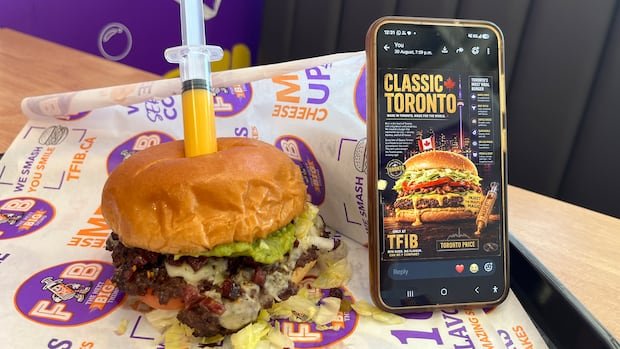

From playful-looking sandwiches to shrimp shaped like doughnuts, artificial intelligence (AI) is making its way into the offerings of local fast-food establishments. Patrons have been sharing online images of menu boards and displays showcasing food items that appear artificial and oddly textured, possibly created using AI technology that simplifies visual creation at a lower cost.
Online comments from diners have criticized these AI-generated food images, likening them to “what aliens would present as Earth food” and describing them as uncanny and nauseating. Some Toronto consumers view such imagery as a reflection of a restaurant’s authenticity and values, with one individual, Cynthia Lem, expressing reluctance to dine at establishments using AI-generated visuals due to concerns about the actual quality of the food.
While some customers find AI-enhanced food images unappetizing and worry about potential misrepresentations, restaurant industry insiders argue that AI technology has helped them minimize costs in a challenging economic environment. Despite concerns raised by consumers, experts suggest that the strategic use of AI in food photography can be beneficial for small and medium-sized businesses in managing expenses.
Restaurant-goers heavily rely on visual representations when making food choices, making the quality of food imagery crucial for business success. While the use of AI in food photography may raise ethical considerations for some, proponents argue that when done thoughtfully, it can offer cost-effective solutions for businesses facing financial constraints.
The marketing team at The Fancy Induced Burger franchise in Canada exemplifies how AI tools can enhance food images efficiently. By utilizing AI applications, the company has reduced its reliance on professional photographers, saving time and money in the process. The speed and convenience of AI technology have enabled them to create and share marketing content more frequently, particularly on social media platforms.
Concerns about the potential misrepresentation of food items due to AI enhancement have been raised, with experts cautioning against creating unrealistic expectations through imagery. However, the use of AI in food photography is seen as a cost-effective solution for businesses, with human oversight ensuring that enhanced images remain accurate and transparent to customers.
While some professionals in the food industry advocate for traditional food styling practices over AI-generated imagery, they acknowledge the cost-saving benefits AI offers to small businesses. The debate continues on the authenticity and effectiveness of AI in food photography, with hopes that the industry will find a balance between technological innovation and traditional craftsmanship.