
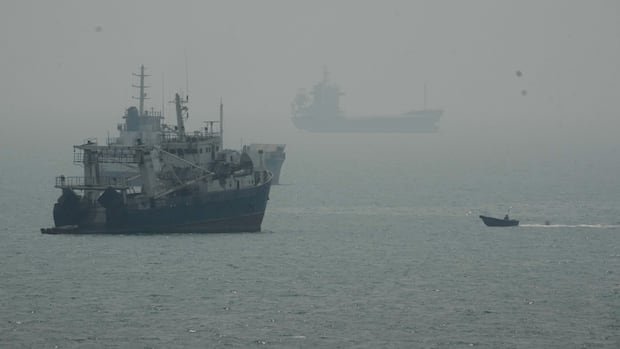

Iran announced on Wednesday that it had carried out strikes on 10 ships near the Strait of Hormuz in response to the sinking of five Iranian oil tankers by the United States. The attacks marked a significant escalation in the ongoing conflict between the two nations. The Iranian Islamic Revolutionary Guard Corps claimed responsibility for launching ballistic missiles at a U.S. base near Al Azraq in eastern Jordan. Additionally, Iran targeted two U.S. vessels and eight oil tankers in an area of the Strait of Hormuz that it had designated as off-limits.
The series of attacks in the strategic waterway caused a spike in oil prices, with the international benchmark Brent crude surpassing $100 per barrel for the first time since July. The conflict has disrupted global oil markets, with ongoing tensions between Saudi Arabia and Yemen’s Houthi rebels further contributing to market uncertainty. The recent Houthi attacks on Saudi cities, resulting in fires at oil facilities, have added to the volatility in energy markets.
The impact of the conflict is being felt by consumers, with rising gas prices in the United States and Canada. Gasoline prices in the U.S. averaged $4.15 per gallon, a notable increase compared to a year ago. Diesel prices have also surged, reaching $5.90 per gallon. The escalating tensions have led to concerns about the stability of oil supplies and the potential economic repercussions.
Amidst the heightened military actions, Iran has declared an expanded restricted maritime zone encompassing areas from Chabahar in Iran to the Gulf of Oman and the Arabian Sea. The country has warned of potential threats to oil tankers in Kuwaiti and Bahraini ports. The Strait of Hormuz, a critical route for global oil transportation, has been severely impacted by the conflict, disrupting the flow of essential resources.
The U.S. military has responded with measures to safeguard oil tankers passing through the strait, although the situation remains volatile. Iran’s deployment of advanced missiles and threats to target U.S. bases in the region have raised concerns about further escalation and potential casualties. The conflict continues to unfold, with both sides engaging in retaliatory actions that have far-reaching implications for the region and global energy markets.