
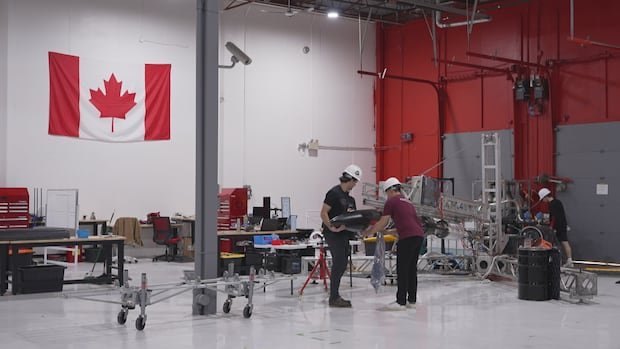

Canada is the only G7 nation without its own rocket launch capabilities, prompting a race among Canadian companies to develop a domestic rocket. This initiative comes as concerns grow among some SpaceX customers that the industry giant may reduce its orbit rides.
Due to Canada’s lack of rocket launch infrastructure, Canadian customers rely on external providers, mainly SpaceX, which launched all 12 Canadian satellites in 2025. These satellites play a crucial role in various sectors such as telecommunications, defense, and earth observation.
To address this dependency, the Canadian government has introduced the Canadian Space Launch Act, aiming to enable launches from Canadian soil. Recent funding of $8.3 million each has been allocated to three Canadian companies, including NordSpace and Reaction Dynamics, working towards achieving light-lift rocket capabilities by 2028.
NordSpace, founded in 2022, faced an unsuccessful rocket test launch in 2025 but plans to retry soon. Reaction Dynamics is developing a unique engine design with a goal to reach orbit by 2028. Canada Rocket Company, established in late 2025, aims to build a medium-lift rocket by 2032, attracting private investments and constructing a test facility in London, Ont.
While SpaceX plans to phase out its Falcon 9 rocket in favor of Starship, emerging rocket makers see an opportunity to cater to the market gap. Concerns arise for smaller players relying on SpaceX’s rideshare program, emphasizing the importance of having a Canadian rocket manufacturer.
With the evolving space industry landscape, Canadian companies are optimistic yet cautious about their rocket development projects. The road to establishing reliable rocket launches from Canada is a long-term endeavor, requiring significant investments and collaborative efforts between public and private sectors.