
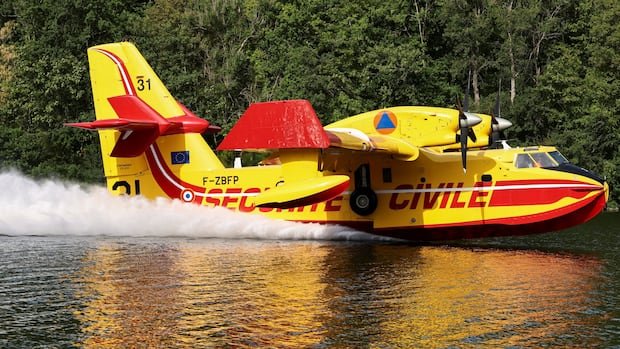

Canada, the United States, and Europe are facing severe wildfires, increasing pressure on the manufacturer of Canadair “Super Scooper” water bombers to ramp up production. De Havilland in Calgary has restarted production of the Canadair after acquiring the program from Bombardier in 2015. Hand-built in Calgary with parts sourced nationally, the Canadair production line, reestablished in 2022, is progressing well with the first two aircraft set for completion and delivery in early 2028.
Political leaders in Canada and Europe are urgently seeking access to these aircraft due to current shortages and aging fleets. Originating in the 1960s, Canadair amphibious firefighting planes were specifically designed for battling vast Canadian forest fires. Their unique ability to maneuver through narrow canyons at low altitudes and swiftly scoop up water from various water bodies sets them apart from other water-carrying aircraft.
Recent criticisms from opposition politicians in France and Spain highlight the lack of operational Canadairs and the resulting unpreparedness to combat wildfires. The demand for new water bombers is echoed by provincial leaders like Manitoba’s Wab Kinew, emphasizing the necessity for additional firefighting aircraft.
De Havilland is feeling the pressure to meet the soaring demand for Canadairs, contemplating the construction of a second production line to complement the ongoing manufacturing at their existing facilities. With orders for 38 water bombers already in place and delivery timelines extending to 2032-2033, the company aims to increase annual production from 10 to 20 units with a second line.
Aviation experts stress the critical need for expanding Canadair production to meet global demands arising from worsening wildfire conditions worldwide. The threat of potential competition from foreign companies developing rival firefighting aircraft looms large, prompting a call for continued Canadian manufacturing prowess in this sector.
Responding to a Senate report recommendation, the federal government’s efforts to bolster firefighting resources include leasing additional aircraft to support provincial wildfire suppression teams. While aerial firefighting units play a crucial role in wildfire containment, ground crews remain the primary force in extinguishing fires. The government remains committed to enhancing national firefighting capacities to address the escalating challenges posed by intensifying wildfire seasons.