
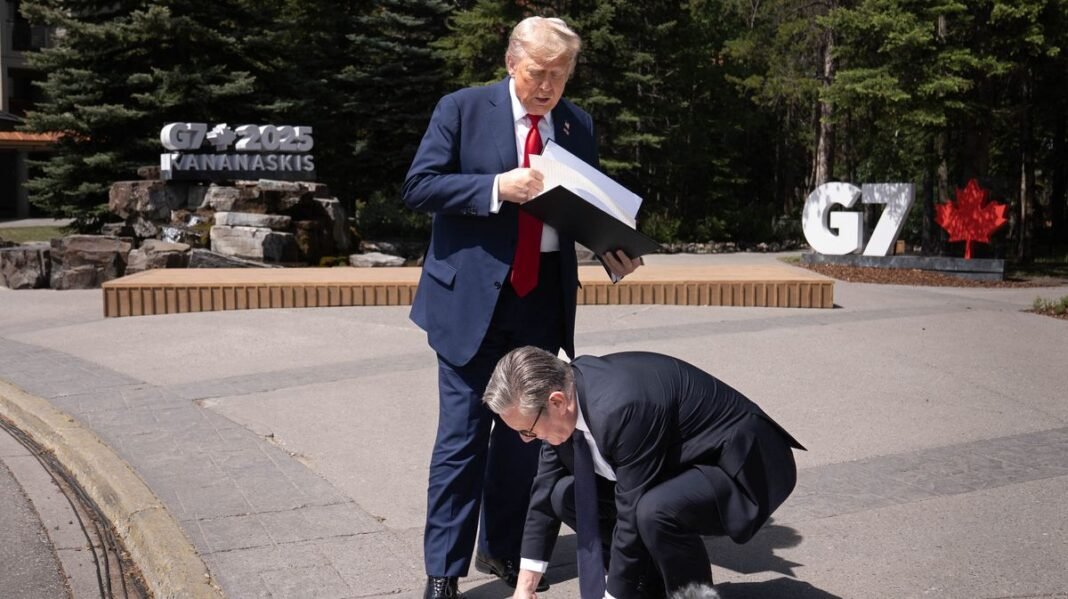

In an unexpected turn of events during Donald Trump’s second term, his positive rapport with Keir Starmer has caught many by surprise. Starmer shared that they share common ‘family values,’ and many European counterparts view him as a key intermediary in their dealings with Trump.
A recent example of this was evident in Nato and Denmark’s attempts to placate Trump regarding Greenland. Starmer conveyed messages from Nato’s Mark Rutte and Danish Prime Minister Mette Frederiksen, showing his ability to influence Trump’s perspectives, albeit temporarily.
While their relationship has had its successes, challenges have also emerged, as seen during their initial high-stakes meeting last February. Despite initial tension, Starmer’s offer of a second state visit from King Charles helped to break the ice and foster a positive atmosphere.
Although Starmer was pleased with Trump’s offer of a trade deal, subsequent negotiations have faced hurdles, leading to unresolved trade issues such as tariffs on steel exports. The signing of a Tech Prosperity Deal was short-lived, as the US suspended it due to perceived trade barriers.
Starmer’s influence over Trump regarding Russia and Ukraine remains uncertain, with Trump oscillating between various advisors. Trump’s unpredictable actions, including the invasion of Venezuela without informing Starmer, have strained their relationship on certain fronts.
Despite Starmer’s efforts to influence Trump on contentious issues like Greenland, Trump’s decisions have often diverged from expectations, leading to potential trade conflicts. The uncertain nature of their relationship raises questions about its depth and efficacy in addressing critical global issues.
As Trump’s actions continue to raise uncertainties, the true extent of the benefits derived from his interactions with Starmer remains ambiguous. The evolving dynamics between the two leaders leave observers pondering the authenticity of their relationship and its overall significance.