
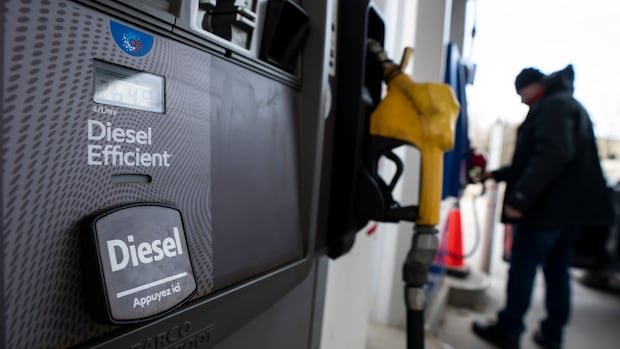

Diesel prices are surging globally due to ongoing conflicts, leading to significant cost increases for fueling trucks that transport goods across Canada. The Canada Truck Operators Association’s Tej Dulat expressed concerns about the impact on the industry, noting that the spike in prices since Russia’s invasion of Ukraine in 2022 has tightened profit margins. The rising costs are expected to be passed on to consumers, affecting grocery prices.
As of the latest data, diesel prices in Canada have reached $2.62 per liter, surpassing last week’s $2.52 and marking a significant increase from the previous year. Vancouver reported even higher prices at $2.92 per liter. The U.S. is facing record-high diesel prices, exceeding $6 per gallon, causing economic ripples nationwide.
Experts highlight that geopolitical conflicts, rather than tariffs, are currently driving the increase in oil prices, impacting the availability of diesel. Shortages have been exacerbated by reduced exports from the Persian Gulf and Russia’s ban on diesel exports following Ukrainian refinery damages. Maintenance at Canada’s largest refinery in New Brunswick is further limiting diesel production.
To alleviate some of the financial burden, the federal government extended the suspension of the fuel excise tax on diesel until January 2027. However, industry analysts warn that this relief may not be sufficient to offset the escalating costs, posing a threat to the North American economy.
As tensions persist between the U.S. and Iran, concerns mount over the potential spillover effects from high gas prices to other goods. The scarcity of diesel, exacerbated by geopolitical factors, could lead to prolonged inflation if energy prices remain elevated.
Looking ahead, experts anticipate even higher diesel prices in the winter, posing challenges for various industries and consumers. The impact on the food supply chain is significant, affecting transportation, storage, and production processes. Factors like extreme weather events further compound the challenges, contributing to a perfect storm of rising food prices.
Evan Fraser from the University of Guelph’s Arrell Food Institute warns of a potential long-term shift towards elevated food prices, affecting low-income Canadians the most in the short term. The uncertainties surrounding energy costs and geopolitical tensions are reshaping the global food production landscape, signaling a challenging road ahead for consumers and industries alike.