
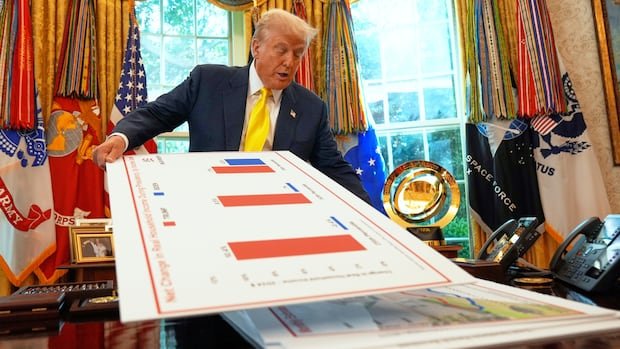

In his state of the union address in March 2025, President Donald Trump expressed optimism about the economic benefits of tariffs, predicting a surge in revenue and job creation on an unprecedented scale. Despite his earlier claims on Twitter during his first term in 2018 about using tariffs to reduce the national debt and lower taxes, the promised job growth has not materialized. Instead, the U.S. government debt has surpassed $40 trillion, leading to concerns in the bond market and maintaining high yields and interest rates.
While tariffs have caused hardships for some, they have resulted in significant wealth transfers from lower-income and middle-class individuals to wealthy corporations, according to economists. The overall economic strategy of the Trump administration and the Republican Party, including tax policies, has exacerbated this wealth disparity.
The implementation of tariffs has disproportionately impacted lower-income households, as they tend to spend a larger portion of their income on taxed goods. Wealthier households, on the other hand, allocate more of their spending to services and non-tariff affected items, benefiting from the tariffs indirectly.
The tariff exemption and rebate systems in the U.S. have further widened the wealth gap, with major corporations receiving substantial refunds, while smaller businesses and individuals are excluded from such benefits. The arbitrary nature of these exemptions has raised concerns about political favoritism and lack of transparency in the tariff regime.
Despite claims that tariff refunds would lead to price reductions benefiting consumers, studies indicate that the burden of tariffs falls primarily on U.S. buyers. The promised resurgence in manufacturing jobs has not materialized, with a decrease in manufacturing employment since Trump’s second term began.
The revenue generated from tariffs has fallen short of compensating for tax cuts, mostly benefiting the wealthy. The growing national debt has led to increased debt-servicing charges and higher interest rates, impacting the overall economy and potentially reducing public services.
In conclusion, while tariffs were promoted as a means to boost the economy and create jobs, their actual impact has been far from the promised benefits. The wealth concentration effect of tariffs, coupled with the inadequate revenue generation and negative consequences on consumers and international relations, raises doubts about the effectiveness of this economic strategy.
[Source](https://www.cbc.ca/news/politics/trump-tariffs-redistribute-wealth-up-food-chain-9.7316144)