
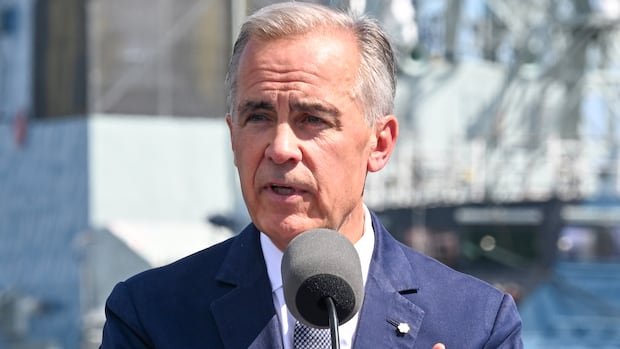

Prime Minister Mark Carney has stated his readiness to resume negotiations with the Trump administration once the United States shows genuine interest in forming a strong economic partnership and stops treating Canada as a subordinate entity.
Speaking in Lévis, Que., Carney emphasized the importance of the U.S. approaching the negotiating table with the right attitude towards Canadian industries for productive discussions to occur. While acknowledging the existing trade agreement between Canada and the U.S. (CUSMA), Carney highlighted the potential for enhancements beneficial to all parties. However, he firmly stated that Canada cannot accept a stance that disadvantages its industries and citizens compared to American counterparts.
Carney’s decision to walk away from negotiations on Friday was triggered by last-minute changes introduced by the U.S. team, which Canada deemed unfair and detrimental. These demands would have limited Canada’s flexibility in signing trade agreements with other countries and posed a threat to French-language media subsidies and bilingual product labeling requirements.
In response to Trump’s announcement of increased tariffs on Canadian automobiles, car parts, and steel, Carney expressed his disappointment, emphasizing that such measures would harm the industries over time. The president’s declaration that Canada would be treated differently and his subsequent social media posts were met with concern by Carney and his team.
Amidst escalating tensions, Ontario Premier Doug Ford suggested imposing surcharges on electricity exports to the U.S. as a response to the latest tariffs. Carney supported the idea, highlighting Canada’s significant role in providing energy and industrial products to the U.S., despite Trump’s assertions to the contrary.
Carney’s visit to Lévis also included the announcement of $11.3 billion in funding for Quebec’s shipbuilding industry to construct new icebreakers for the Canadian Coast Guard using domestically sourced steel. Quebec Premier Christine Fréchette emphasized the province’s commitment to strengthening its economy and exploring various strategies to navigate the evolving trade landscape.
While Carney outlined specific conditions for resuming negotiations with the U.S., U.S. Vice-President JD Vance conveyed a more diplomatic tone, indicating ongoing discussions and a respectful approach to the negotiation process. Vance’s remarks echoed sentiments expressed by President Trump, criticizing Canada’s trade policies and positioning it unfavorably in international trade relations.
The escalating trade tensions between Canada and the U.S. underscore the complexities of international trade dynamics and the critical importance of fostering mutually beneficial partnerships.