
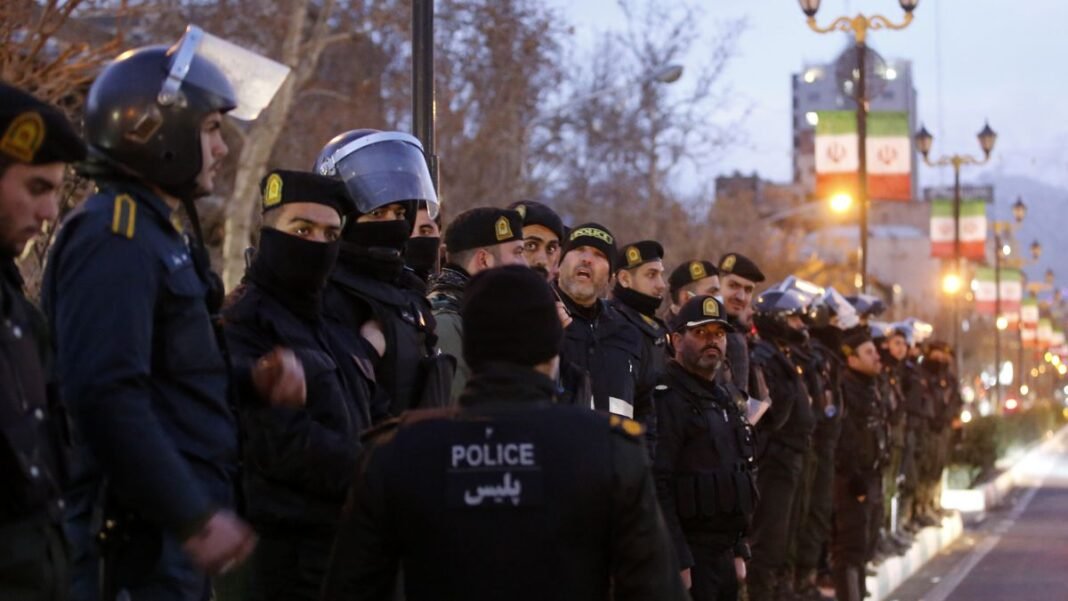

Iran has heightened its security measures following the postponement of US air-strikes due to concerns about their efficacy. Reports indicate that Iranian leaders have taken precautionary measures, with security forces and police on high alert to prevent further protests following President Trump’s warning of potential retaliation over allegations of Tehran planning to execute detained opposition figures.
It is speculated that President Trump decided to delay the mission amid worries that it might not achieve its intended goals of supporting anti-government demonstrations. However, the option for a future attack remains on the table pending additional intelligence from Iran.
A western security source suggested that the difficulty in targeting specific sites in cities like Tehran, coupled with the risk of civilian casualties, contributed to the decision to hold off on the air-strikes. Meanwhile, the UN Security Council has convened an emergency meeting in response to the deadly protests in Iran, requested by the US, prompting conciliatory statements from Tehran to ease tensions after Trump’s threats of intervention.
Despite the turmoil, reports indicate that Iran has refrained from executing detained individuals involved in the recent protests, which have resulted in a reported death toll of at least 2,615 according to the US-based Human Rights Activists News Agency. The situation mirrors past periods of unrest in Iran, reminiscent of the upheaval surrounding the 1979 Islamic Revolution.
Amid these developments, there have been conflicting statements regarding the fate of detained protesters, with Iran’s judiciary asserting charges related to national security and propaganda activities against the state. Notably, Iranian Foreign Minister Abbas Araghchi denied any plans for executing individuals, aligning with Trump’s stance against such actions.
In response to these events, various countries and organizations, including Canada, France, Germany, Italy, Japan, the UK, the US, and the EU, expressed grave concern over the Iranian government’s handling of the protests. They strongly condemned the use of violence by Iranian security forces against demonstrators, emphasizing the need for a peaceful resolution to the unrest.
The tensions have also impacted air travel in the region, with Europe’s largest airline group announcing the suspension of night flights to and from Tel Aviv and Amman for five days due to escalating regional uncertainties. Lufthansa and its subsidiaries have adjusted flight schedules to operate during daylight hours only, citing the volatile Middle Eastern situation as a reason for the change.
Overall, the international community remains vigilant as Iran grapples with internal strife, with diplomatic efforts underway to address the escalating crisis and prevent further violence.